
Where Fashion Becomes Architecture and Power
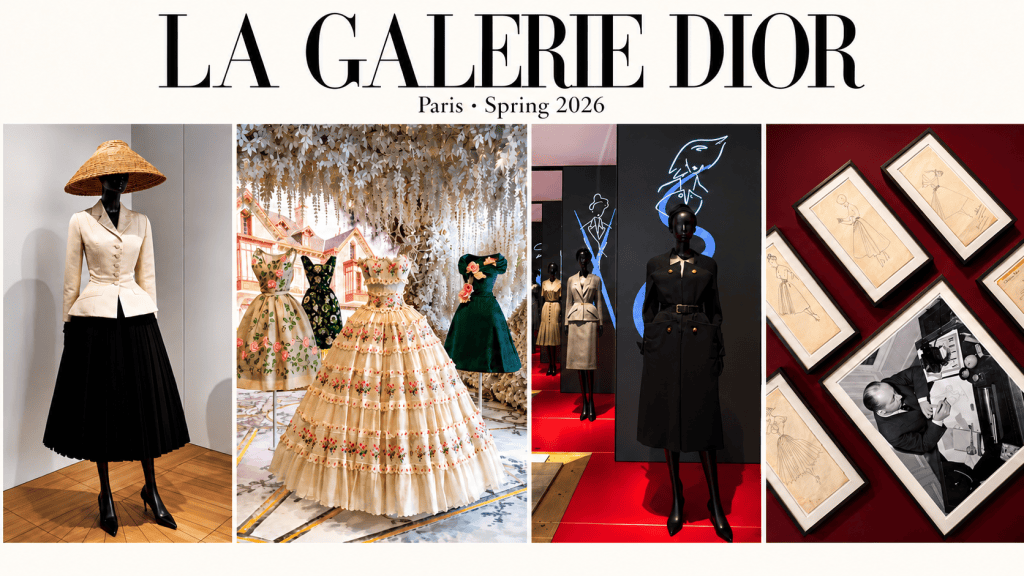
La Galerie Dior in Paris is more than a fashion exhibition. It presents the history, visual identity, and couture heritage of the House of Dior within a space where fashion, art, photography, perfume, and architecture exist as part of the same universe.
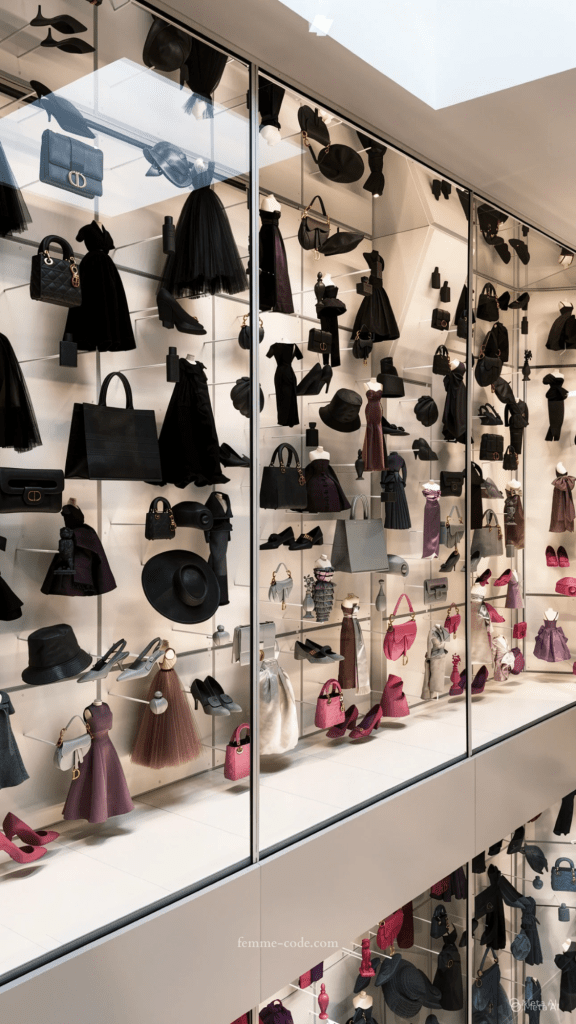
The gallery’s central atrium rises through several floors. Glass walls are covered with Dior-inspired forms: bags, shoes, dresses, and couture motifs transformed into monumental installations in shades of green, yellow, red, orange, pink, black, and blue.
The exhibition begins with Christian Dior’s early life and creative development. Archival books, original fashion sketches, historical documents, photographs, and film footage guide visitors through the journey that ultimately led him to the world of haute couture.
Throughout the galleries, couture, perfume, photography, magazine culture, art, and the history of the House of Dior are presented side by side.
One of Christian Dior’s most famous quotes accompanies the exhibition:
“My dream? To make women happier and more beautiful.”
The idea remains visible throughout the entire experience.
During the 1940s and 1950s, Christian Dior maintained close relationships with many of the era’s most celebrated actresses. One gallery is dedicated to the iconic women for whom the House of Dior created bespoke couture gowns and eveningwear.
Among the most recognizable pieces is Princess Diana’s peacock-blue silk gown with lace details, worn at the 1996 Met Gala in New York. Designed by John Galliano, the dress remains one of the most memorable creations in the history of the House of Dior.
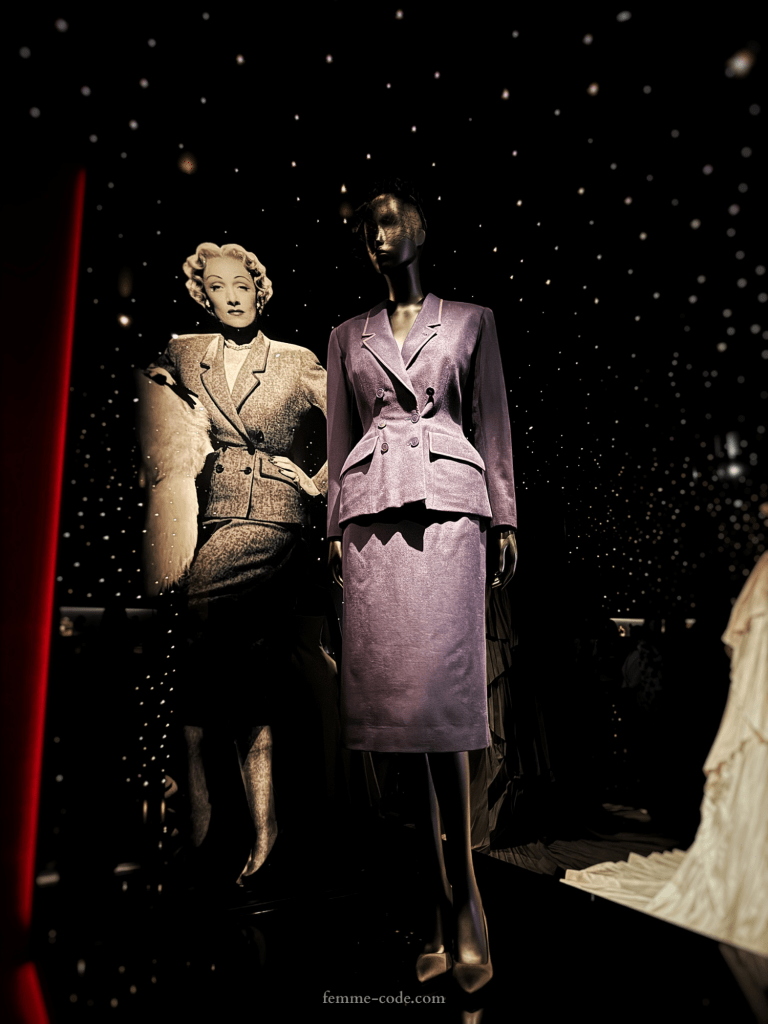
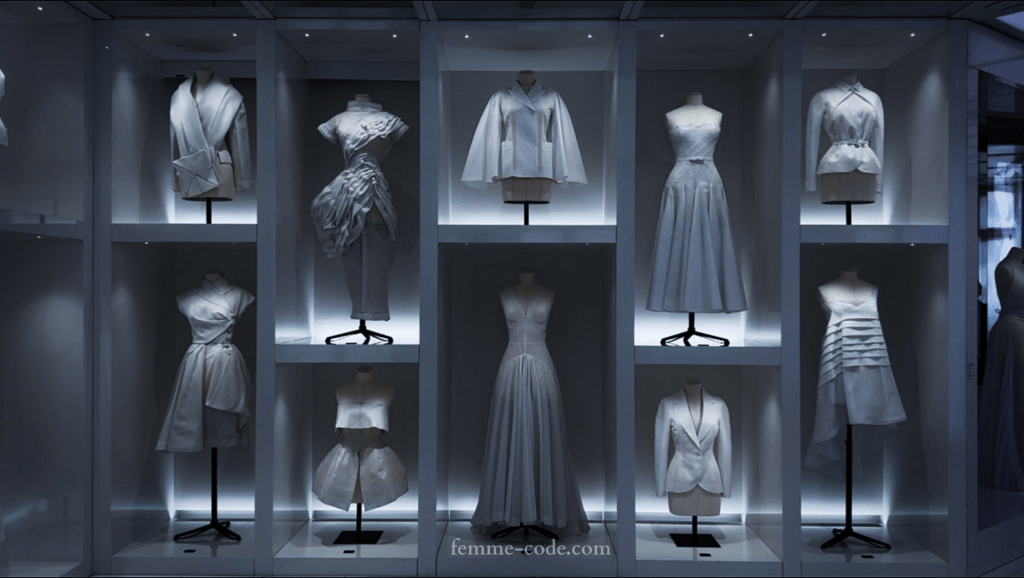
Marlene Dietrich is another prominent figure within the exhibition. She was particularly drawn to Dior’s structured silhouettes, garments that combined femininity with discipline and precision.
One of Dior’s greatest strengths was his ability to dress very different women through the same couture language. The same silhouette could work equally well for royalty, film stars, and women whose elegance relied on restraint rather than spectacle.
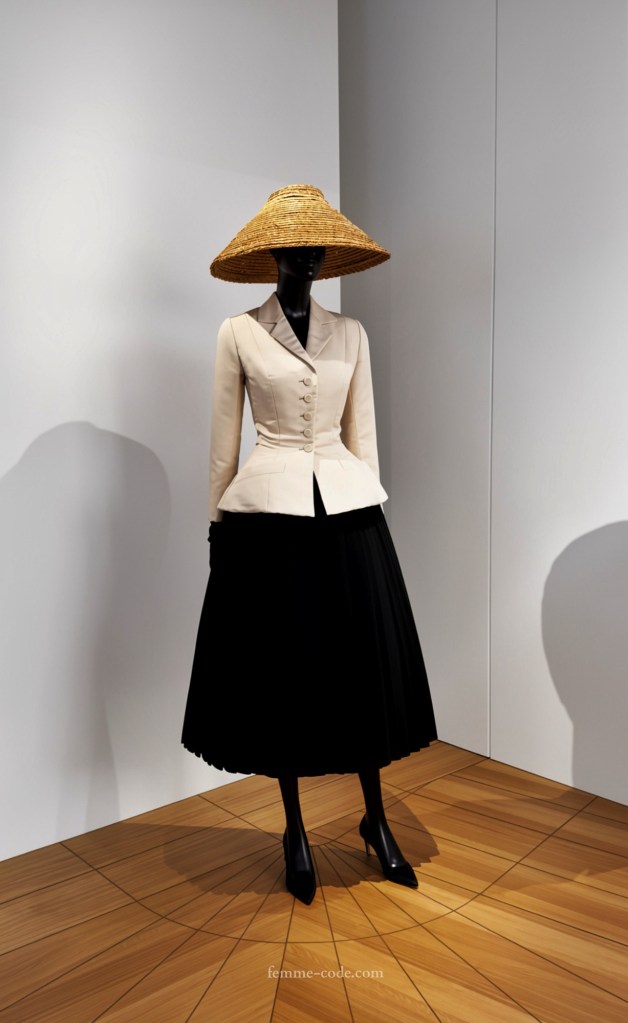
The legacy of the New Look is present throughout the exhibition. Defined waists, carefully balanced proportions, dramatic skirts, and precisely constructed silhouettes reveal a vision of fashion built on structure and harmony.
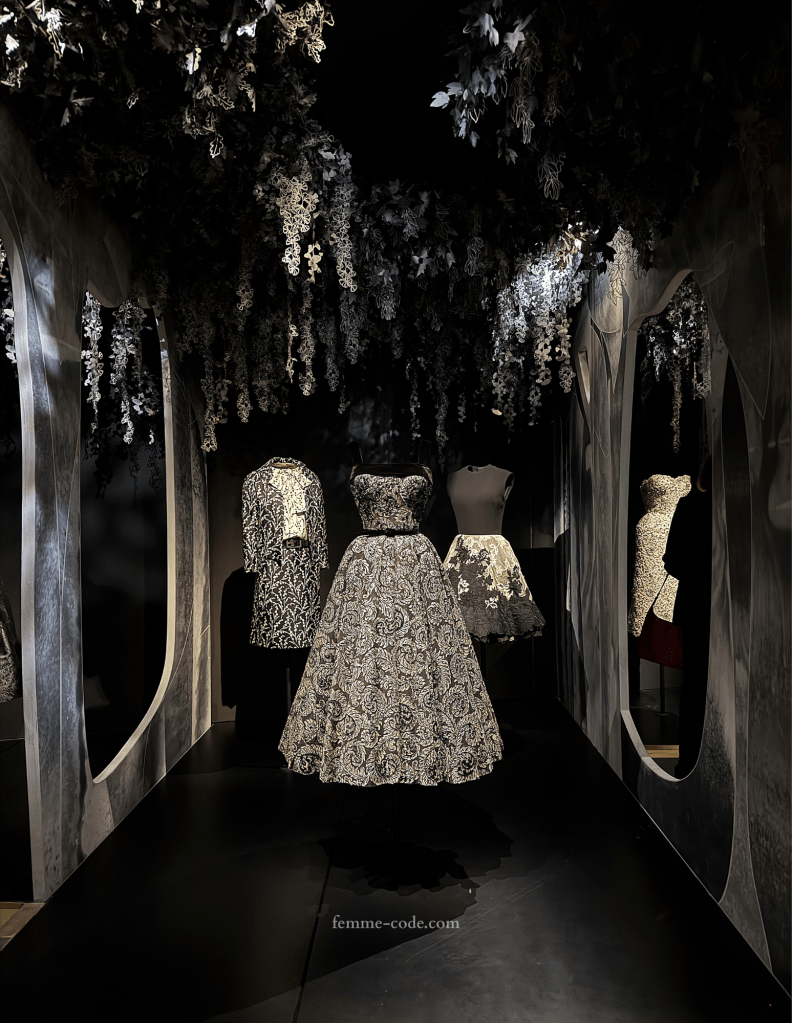
Christian Dior’s fascination with flowers also played a significant role in his creative world. His childhood home in Normandy and the gardens cultivated by his mother remained a lifelong source of inspiration. Roses, lilies, and botanical motifs repeatedly appeared throughout Dior couture collections. La Galerie Dior translates this influence into space. Floral embroidery, botanical motifs, layered textiles, and suspended installations recall the natural imagery that became one of the foundations of the Dior aesthetic.
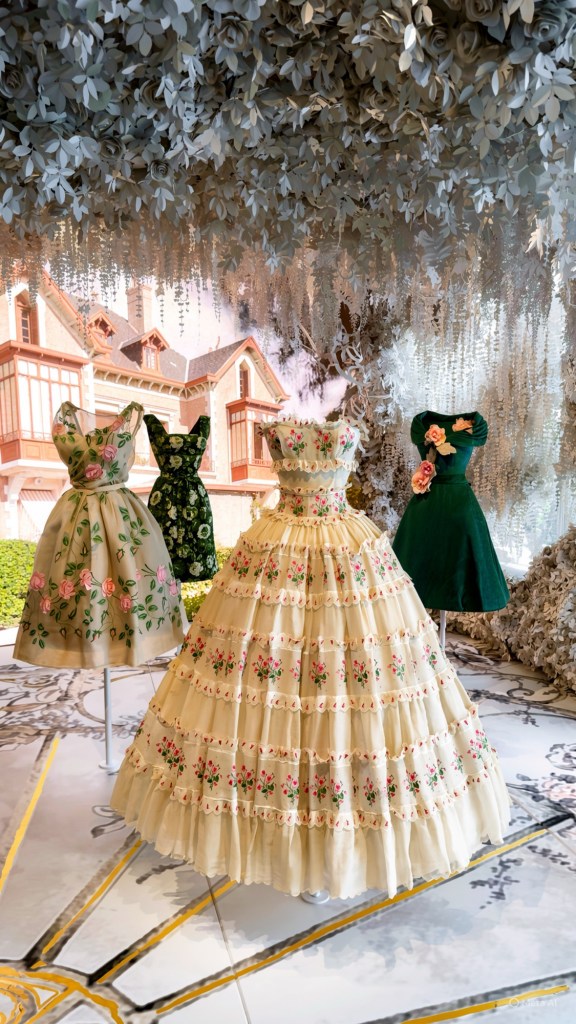
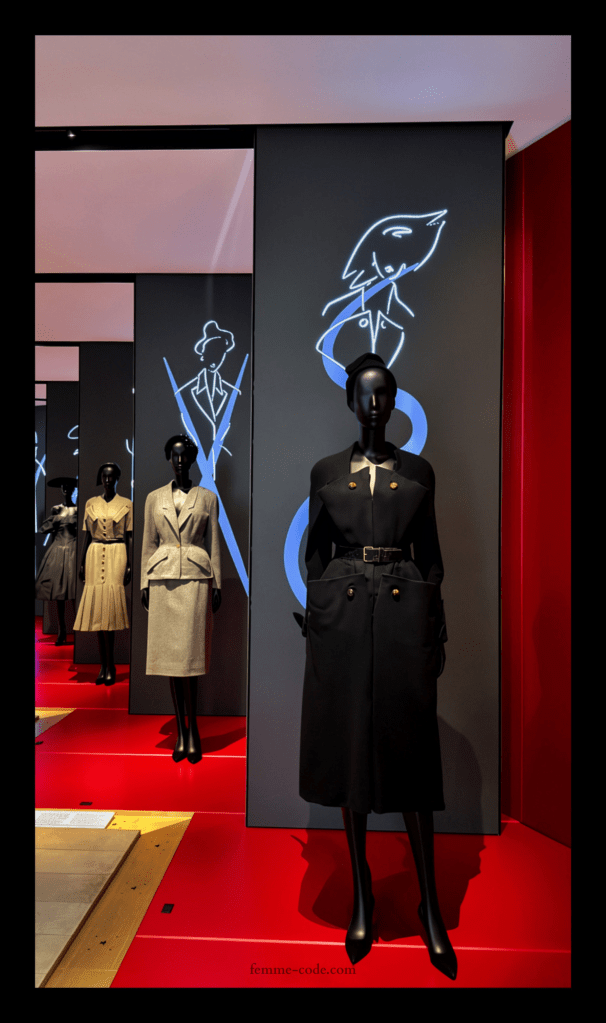
One of the exhibition’s most impressive achievements is its use of space. Long, dark galleries are followed by bright rooms filled with floral installations, lighter textiles, and softer silhouettes. Lighting, sound, and spatial design continuously shape the visitor experience.
One of the key themes of the 2025–2026 exhibition was the visual dialogue between Azzedine Alaïa and Christian Dior. The focus was not on decoration but on construction: the cut of a garment, the architecture of the silhouette, the shaping of volume, and the structure of the female form.
Alaïa admired Dior throughout his life and collected hundreds of Dior couture pieces for his personal archive. Both designers shared a fascination with the same question: how can a garment shape the presence of the body within space?
La Galerie Dior also functions differently from a traditional museum exhibition. The House regularly rotates couture garments and archival textiles in order to preserve fragile materials, meaning that each visit offers a slightly different perspective on the Dior archive. By the end of the exhibition, what remains is not a single dress or collection, but a broader understanding of the visual world created by the House of Dior. La Galerie Dior demonstrates how couture can become cultural heritage, craftsmanship, and visual identity all at once.

