Category: Interior design

  • Libra Home Decor: Off-White, Pastel Green & Pink Elegance

    Libra Home Decor: Off-White, Pastel Green & Pink Elegance

    Room-by-room zodiac-inspired decorating ideas with soft colours, tactile materials and Art Deco details.

    Launching in October, while we are still in Libra season, our astrology-inspired interior design series begins with Libra. The Astrology Interior series blends astrology and interior design, offering a creative starting point for a more personal home.

    Libra home decor brings harmony, beauty and proportion into focus. Comfortable furniture, expressive artwork and a thoughtful layout can create spaces that feel elegant, welcoming and easy to live in.

    What Inspires Libra Home Decor?

    In astrological tradition, Libra is an air sign ruled by Venus. Its symbol, the scales, suggests balance and the relationship between contrasting qualities.

    The air element translates into light-filled rooms, open sightlines and furniture that allows space around it. Glass tables, slender legs and clear wall surfaces contribute to this sense of lightness.

    Venus provides a symbolic connection to art, beauty and the senses. Velvet upholstery, a distinctive glass lamp or a painting chosen for its personal meaning can express this side of a Libra-inspired interior.

    Connection also shapes the layout: seating arranged for conversation, a welcoming dining table and comfortable shared spaces give the symbolism a practical expression.

    One Zodiac Sign, Many Personal Styles

    No zodiac sign has a fixed colour palette that suits everyone. Even within astrology, the Sun sign alone does not describe an entire personality or aesthetic preference; Venus and other chart placements add nuance.

    Someone with a Libra Sun and Venus in Scorpio, for example, might be drawn to deeper colours, stronger contrasts and more dramatic details. This is an interpretive possibility rather than a rule. Personal experiences, cultural background and daily routines also shape what feels right at home.

    The off-white, pastel green and pink palette explored here is one possible interpretation of Libra-inspired interior design. Its individual elements can be adapted to different tastes.

    For a richer alternative, explore dark feminine interior design, with its burgundy tones, velvet and contrasting surfaces.

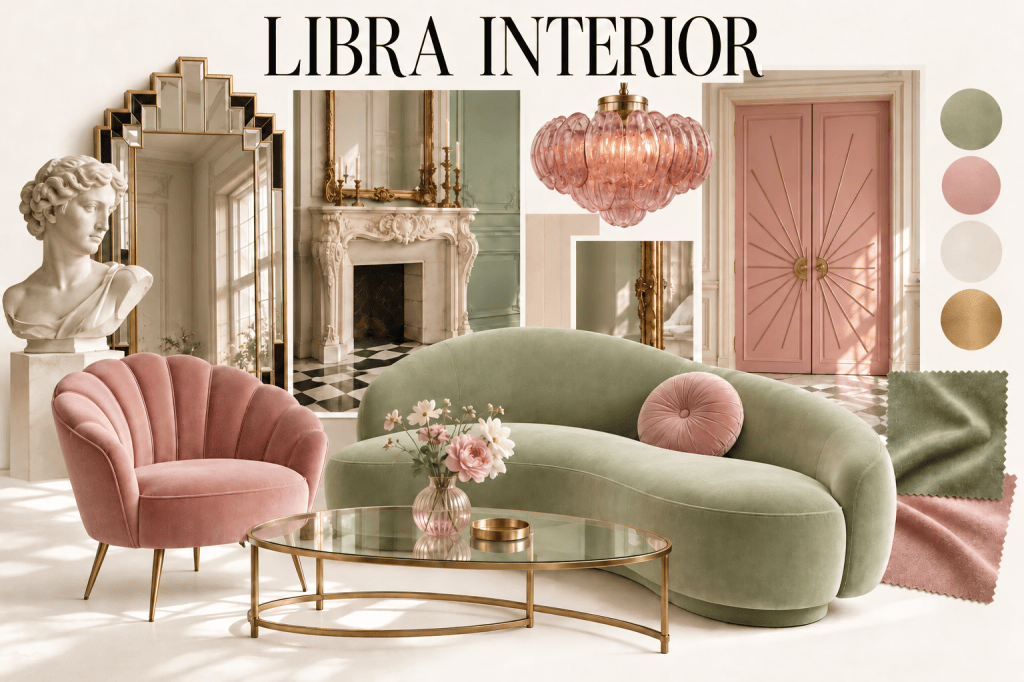
    Libra Interior Colours and Style

    Off-white, pastel green and muted pink share the foundation of this scheme. Their proportions can change from room to room while keeping the home visually connected.

    Off-white works across walls, curtains, bedding, cabinetry and larger pieces of furniture. It gives coloured accents space and helps link adjoining rooms.

    Pastel green, including pale pistachio and soft sage, can appear on a sofa, headboard, kitchen cabinets or bathroom tiles. Dusty pink introduces warmth through an armchair, cushion, glass light or painted door.

    Brass and champagne-gold accents connect mirrors, handles and lighting. A narrow black frame or small geometric pattern gives the softer shades a clearer outline.

    Libra Style & Aesthetic

    Libra-inspired interiors can take several stylistic directions. Their shared thread is a considered relationship between comfort, proportion and expressive details. These approaches can stand alone or be combined to suit a personal home.

    Modern Classic

    Traditional wall mouldings and well-proportioned furniture sit alongside clean-lined tables and contemporary lighting. An upholstered sofa, softly draping curtains and restrained metal accents create an elegant setting that can evolve as individual pieces change.

    Romantic & Feminine

    Curved silhouettes, scalloped upholstery and delicate floral details give this direction its softness. Off-white linen, pastel green velvet and muted pink textiles can be layered with ribbed glass and a softly shaped mirror. Plain surfaces between decorative elements allow the room to feel composed.

    Minimalism with Luxurious Accents

    An off-white foundation and a small number of carefully chosen pieces create an airy interior. A stone-topped table, velvet chair or distinctive brass light introduces richness through material and craftsmanship. Practical storage and generous space around furniture help each feature stand out.

    Art Deco Elegance

    Stepped mirrors, fan-shaped details and geometric patterns bring structure to softer furniture. Brass outlines, glass surfaces and paired lights can suggest Art Deco glamour in measured accents, without requiring every piece in the room to follow the same period style.

    Artistic & Personal

    A gallery wall, an original painting or a sculptural object can anchor the scheme. Repeating a colour from the artwork in a cushion or ceramic helps connect the display with its surroundings. A collection gains coherence through spacing, framing and scale while leaving room for individual taste.

    Libra Living Room Ideas
    Layout and Furniture

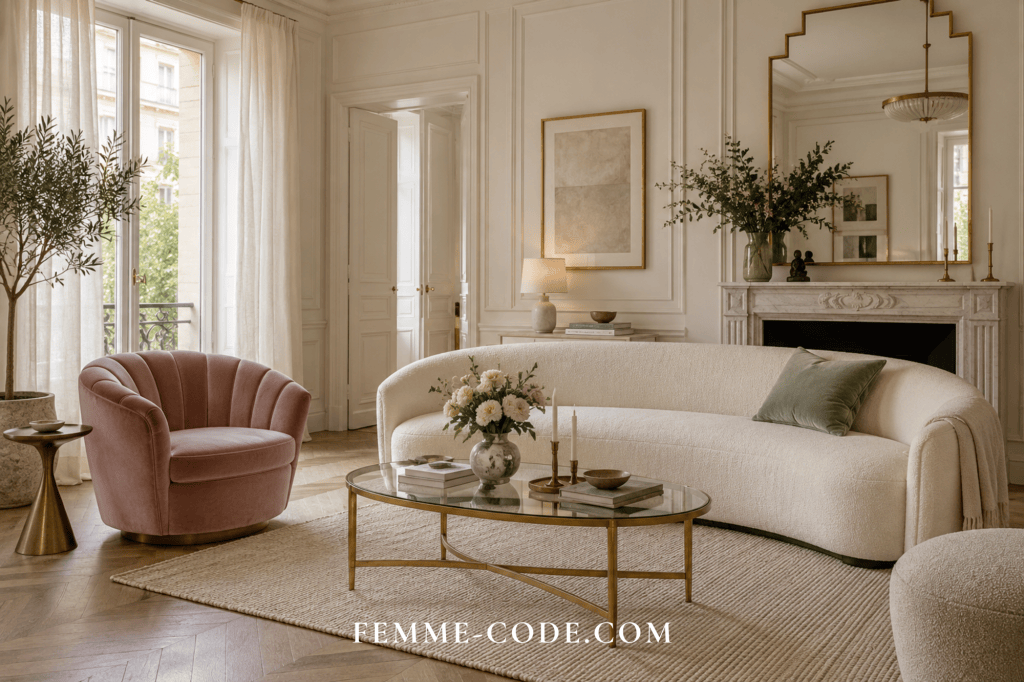
    A Libra-inspired living room can centre on social connection. A sofa and armchair turned towards each other, a reachable coffee table and clear walking routes create a comfortable setting for conversation.

    A rounded sofa establishes the seating area’s shape. A scalloped armchair or curved accent chair can accompany it, sized to suit the room. A generous sofa may need only one compact chair beside it.

    Paired lamps, coordinating side tables or similarly sized pictures establish rhythm. Furniture from different collections can work together when its colours, proportions or finishes share a connection.

    Colours and Textiles

    Against off-white walls, a pastel green sofa and pink armchair become focal points. With an existing neutral sofa, cushions, a throw or curtains can introduce the same palette.

    Velvet pairs well with a simply woven rug and softly draping curtains. The variations in texture add depth without requiring more colours. An oval glass coffee table keeps the arrangement light and reveals the rug beneath.

    Decor and Lighting

    An Art Deco mirror, substantial painting or sculpture gives the room a focal point. A vase and small tray may be enough for the coffee table.

    Combine overhead lighting with a reading lamp and a table light. Independently controlled sources let the room accommodate conversation, reading and quieter evenings.

    Libra Bedroom Decor
    Bed and Furniture

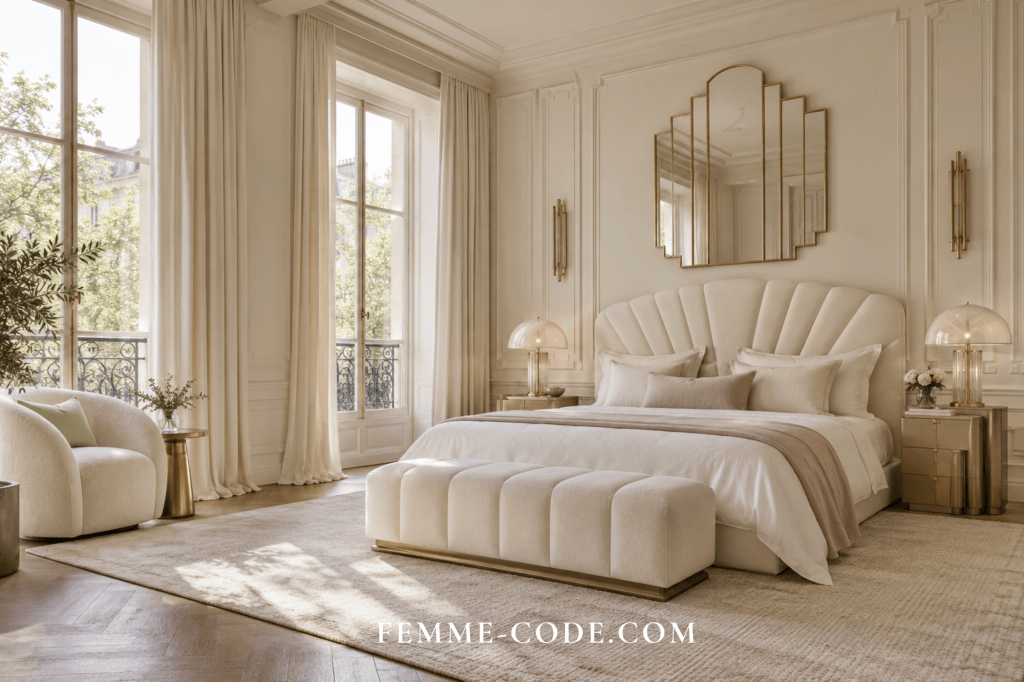
    A comfortable bed anchors the bedroom. A gently curved upholstered headboard carries the soft forms of the living room into a more private setting.

    Bedside tables on either side can create visual balance. If the pieces differ, similar heights or coordinating lamps help connect them. Allow enough space to move around the bed and open storage comfortably.

    In a smaller room, slim furniture and wall-mounted lights can free up bedside surfaces.

    Bedding, Colours and Texture

    Off-white bedding offers a starting point for a pale green headboard, pink bedspread or a few velvet cushions. Cotton, linen and a soft throw provide a varied tactile mix.

    Curtains should suit both the scheme and the room’s need for light control. A sheer layer can be combined with suitable blackout curtains for restful use.

    Mirrors and Personal Details

    A dressing table with a comfortable seat and well-lit mirror creates a useful dedicated corner. Trays, boxes and drawers keep jewellery and smaller belongings organised.

    A favourite print, ceramic vase or personal photograph brings individuality to the bedroom. Leaving clear space around these pieces helps them stand out.

    Libra Kitchen Decor and Dining Ideas
    Colours and Finishes

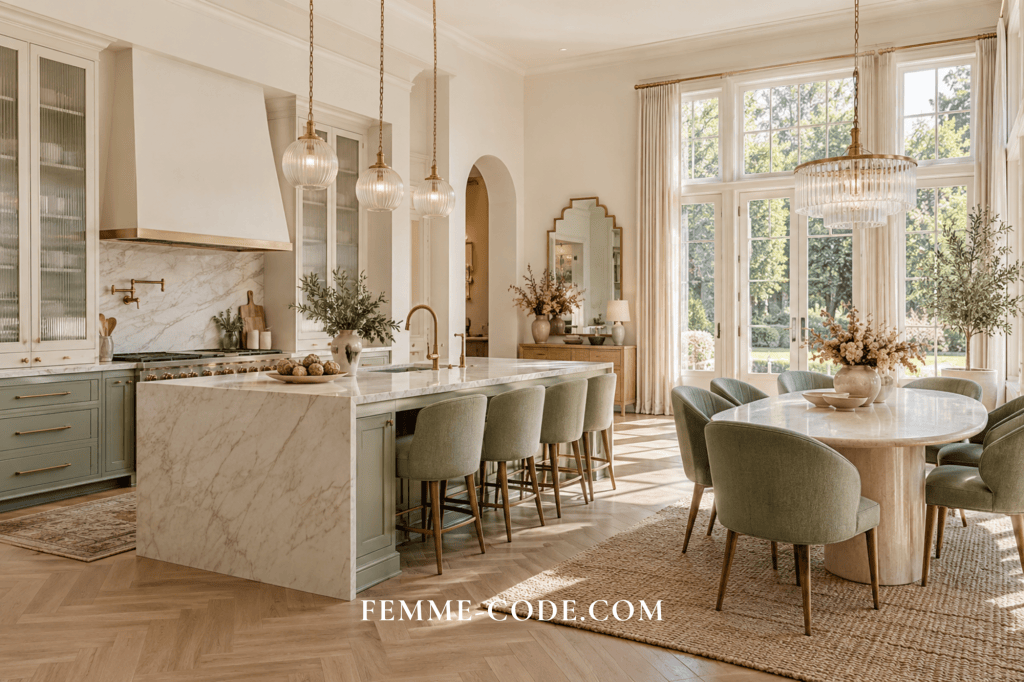
    Off-white and pastel green cabinetry can be paired with a subtly veined worktop and brass handles. Pink may appear in ceramics, tea towels or a small painted area.

    An existing white kitchen can carry the palette through accessories. Choose finishes for durability and ease of cleaning as well as appearance, so the design supports everyday cooking.

    Layout and Balance

    Allow practical space for preparation, cooking and washing up. Keep frequently used tools within reach and preserve a clear section of worktop.

    Repeated handles, matching island stools or aligned lights establish order. A few glasses and bowls are enough to give an open shelf character without filling it completely.

    Dining Furniture and Accessories

    A round or oval dining table continues the curved forms found elsewhere in the home. Upholstered chairs make longer conversations comfortable, while a centrally placed glass pendant defines the dining area.

    A ceramic bowl or low floral arrangement can dress the table while preserving sightlines between people seated opposite each other.

    Libra Bathroom Ideas
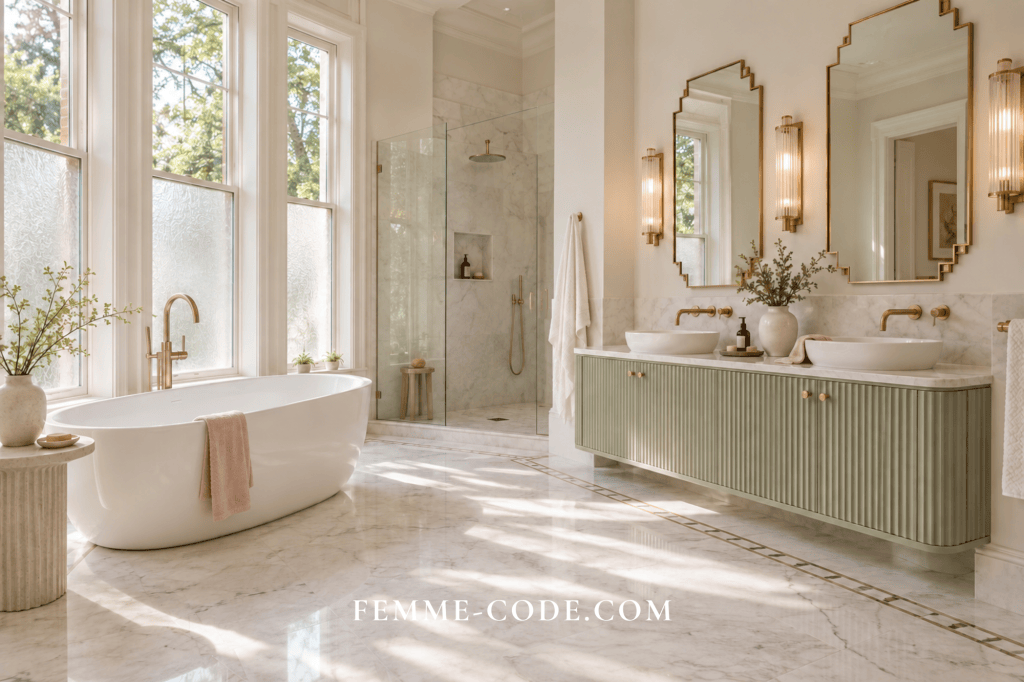
    Tiles and Colour

    Off-white surfaces can be paired with pastel green tiles or a painted vanity. Muted pink can appear through towels, glass accessories or a smaller tiled area.

    Mixing matte and reflective finishes adds interest to a restrained palette. Glossy tiles beside matte cabinetry, or a smooth stone surface beside textured towels, create contrast through materials.

    Vanity, Mirror and Lighting

    A rounded basin and an arched or geometric mirror continue the scheme’s shapes. Bathroom-suitable lights placed on either side of the mirror can provide even illumination around the face.

    Coordinating metal tones across taps, handles and lights gives a compact room a cohesive finish.

    Storage and Accessories

    Closed storage keeps the basin area usable. A soap dispenser, tumbler and small tray can remain on display, with other essentials stored in drawers or cupboards.

    Soft coordinating towels and a simple bath mat add comfort. Decorative pieces should leave enough room for the bathroom’s daily functions.

    Mirrors, Artwork and Decorative Accessories

    A distinctive mirror, painting or sculpture can give a room its identity. Geometric Art Deco frames create a structured counterpart to curved upholstery.

    Consider what a mirror reflects: a window, attractive architectural feature or light fitting can become part of the composition. Artwork benefits from thoughtful scale, framing and placement as well as personal meaning.

    Arrange smaller decorative objects in a few groups rather than scattering them across every surface. A ribbed glass vase, brass dish or favourite ceramic can carry colour and texture without overwhelming the room.

    How to Create Balance in a Libra-Inspired Home

    Use Symmetry and Visual Weight

    Pairs offer an easy starting point: two lamps, two pictures or furniture on either side of a bed. Balance can also come from different objects. A substantial chair on one side of a room may be counterweighted by a floor lamp and side table on the other.

    Size, colour and material all affect visual weight. A dark or strongly patterned piece can command attention even when it is relatively small.

    Declutter and Give Everyday Objects a Place

    Reviewing what is on display and planning useful storage makes a home easier to maintain. Give frequently used items a designated place and leave some shelves, worktops or wall sections clear.

    This allows meaningful possessions to receive attention while preserving usable space.

    Layer Textures Within a Consistent Palette

    Velvet, glass, stone, metal and woven textiles each contribute a different surface. Repeated colours hold that variety together.

    Pair a velvet sofa with a simpler rug, an elaborate mirror with a clean-lined table, or a reflective lamp with matte ceramics. Alternating richer and quieter textures keeps the arrangement considered.

    Choose a Focal Point and Leave Breathing Room

    Decide what should receive the most attention in each room: a sofa or artwork in the living room, the bed in the bedroom, or the vanity and mirror in the bathroom.

    Space around these features reveals their shapes and makes the room comfortable to use. The decorative choices, storage and layout should support how the household actually lives.

    This approach to Libra home decor brings beauty, connection and everyday comfort together. Off-white, pastel green and pink, tactile fabrics and geometric details offer a starting point that can evolve with the person who lives there.
  • Modern Beetlejuice-Inspired Home Decor: Black, White and Green

    Modern Beetlejuice-Inspired Home Decor: Black, White and Green

    Stripes, spirals, checkerboard patterns, and unexpected details bring the film’s playful, surreal mood throughout the home.

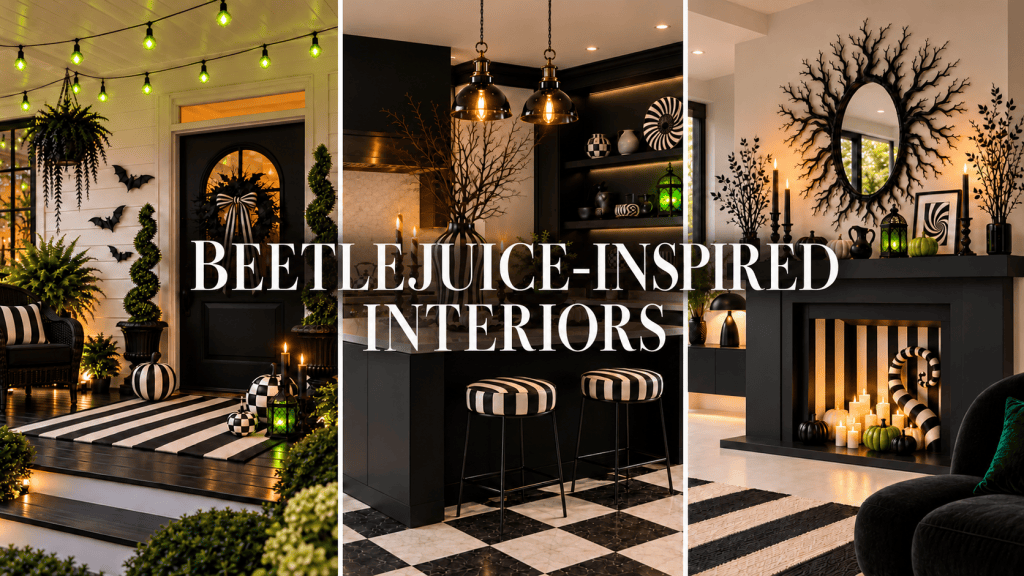
    Beetlejuice-inspired decor is instantly recognizable for its bold contrast of black and white. Orderly stripes meet twisting shapes, unusual objects, and flashes of green. The result can feel elegant and a little strange at the same time.

    In a modern, minimalist home, you don’t have to cover every surface in patterns. Choose one striking feature for each space, then arrange the smaller details around it. This gives the home a consistent look while allowing every area to have its own character.

    1. Porch: Let the Story Begin at the Front Door

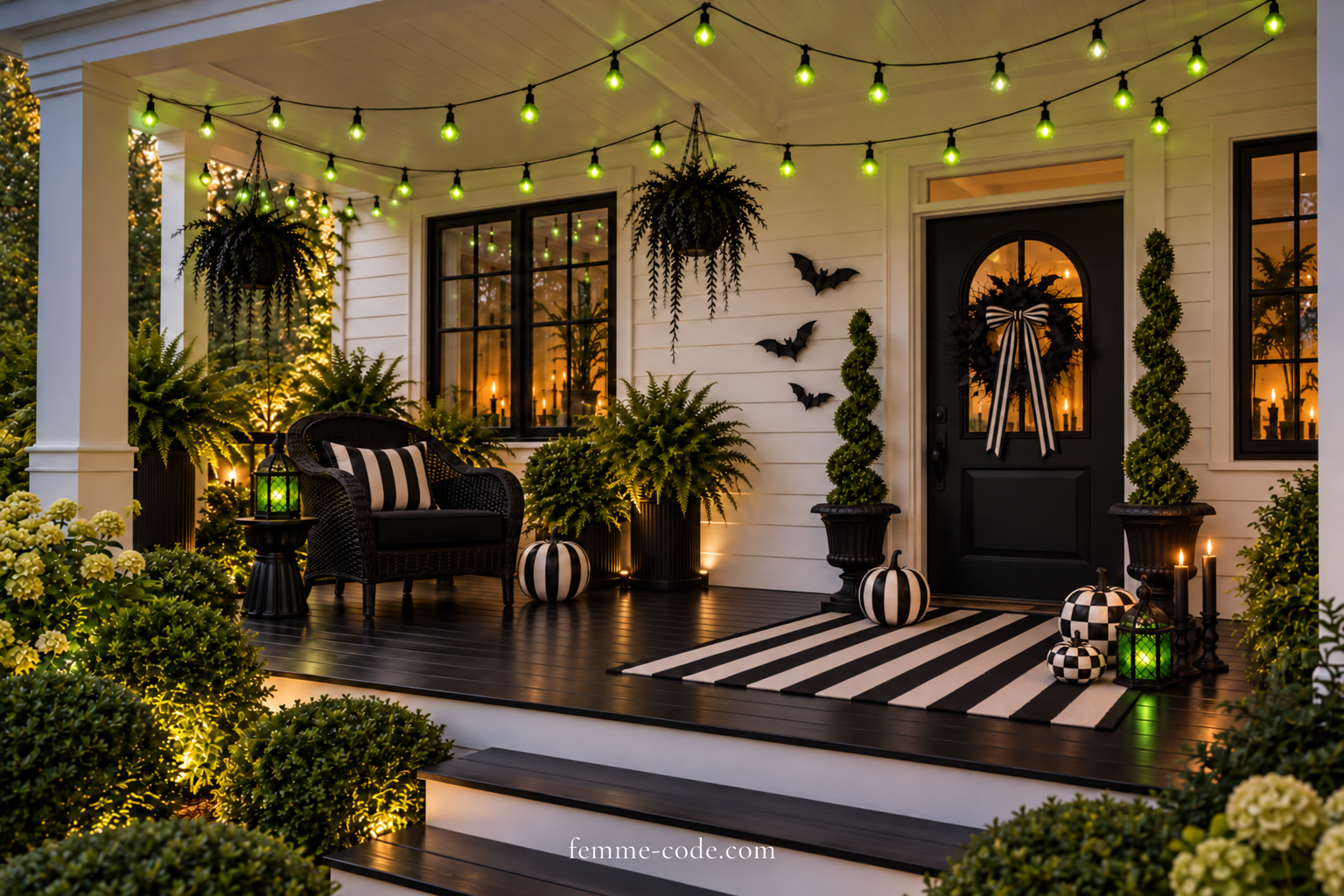
    Wide Beetlejuice inspired porch with striped rug, green string lights and decorative pumpkins

    Twisted topiary trees beside a black front door create an unusual first impression. A black woven chair adds a comfortable place to sit on the wider porch. A black-and-white striped outdoor rug and a few striped or checkered pumpkins strengthen the look.

    A wreath made of dark branches can hang on the door, finished with a black-and-white striped bow. One ornate black lantern with green glass brings in the signature pop of color, while warm candlelight makes the porch feel inviting.

    2. Entryway: Let the Stripes Lead You Inside

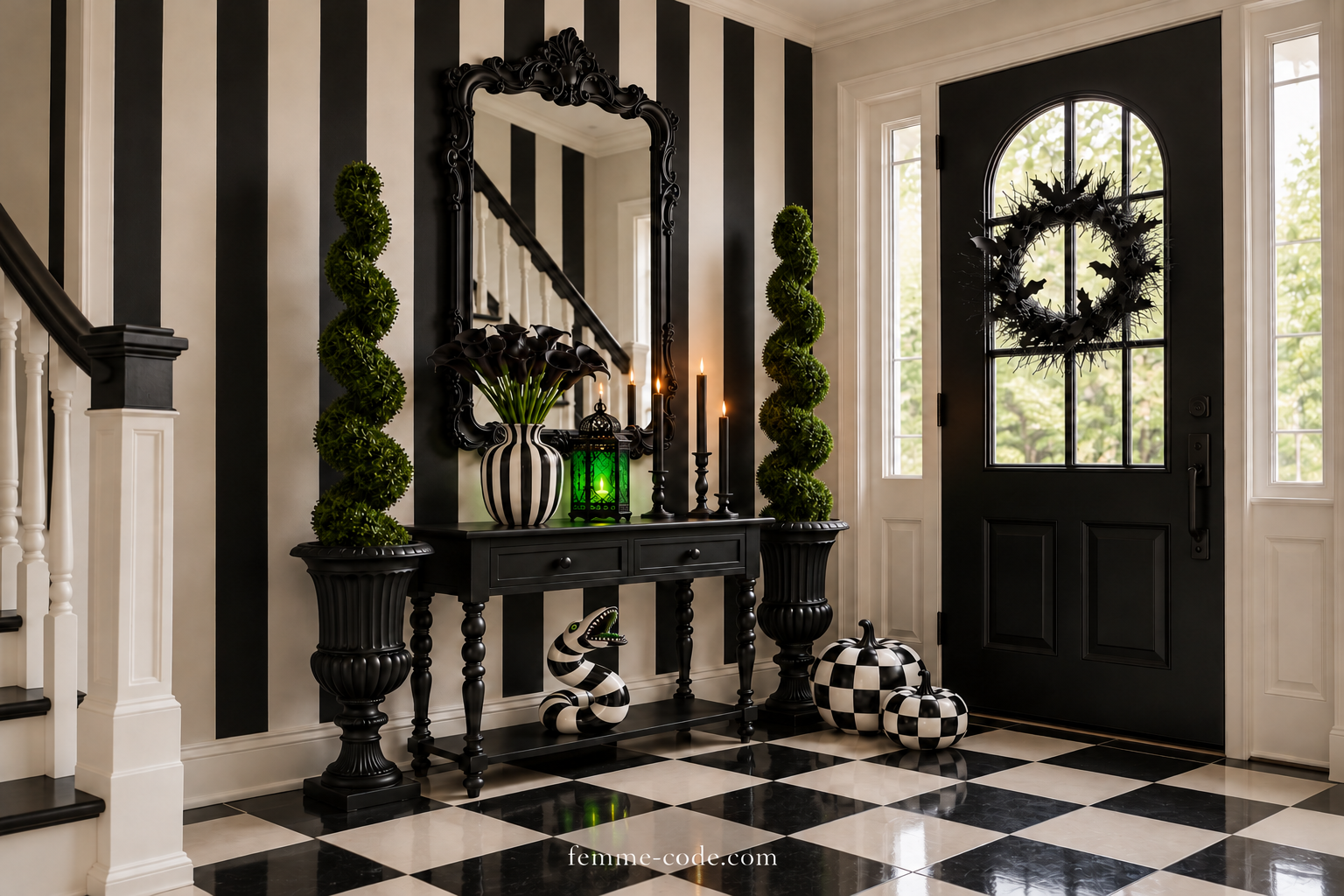
    Black and white striped entryway with mirror, checkerboard floor and green lantern

    A black-and-white striped accent wall can make a statement behind a black console table and an ornate mirror. Checkerboard flooring continues the play of patterns, while the black furniture gives the room a calm foundation.

    Place black calla lilies in a striped vase on the console, alongside a few candles and a green-glass lantern. Smaller Beetlejuice references work especially well here: a checkered pumpkin or a curling sandworm figure is enough to set the mood as soon as someone walks in.

    3. Kitchen: Black Cabinets and Checkerboard Floors

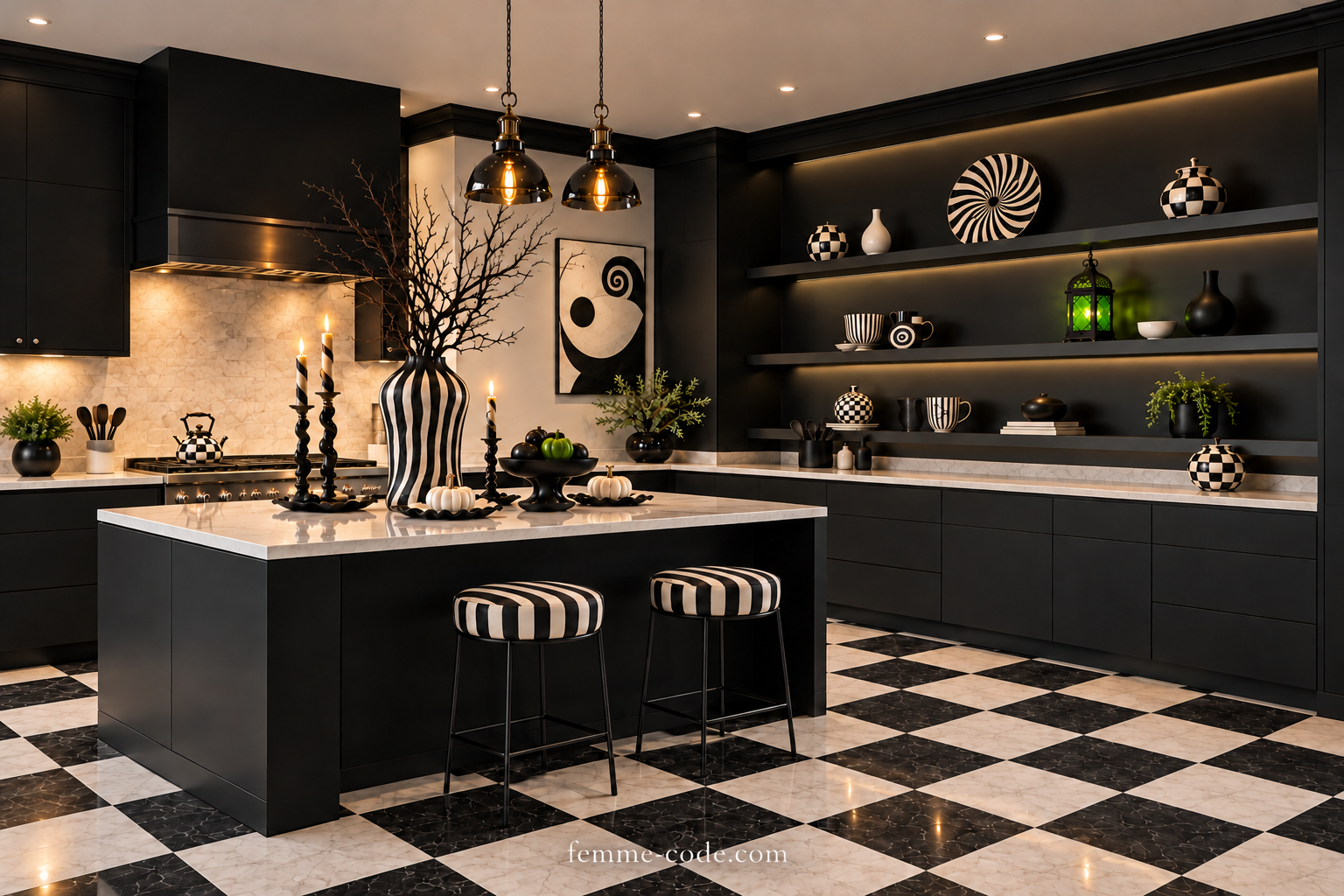
    Modern black Beetlejuice inspired kitchen with checkerboard floor and striped accessories

    Matte black cabinetry makes a light countertop and black-and-white accessories stand out. A large checkerboard floor ties the room together, while striped stools at the island add a playful touch.

    Make a tall striped vase filled with branching black twigs the centerpiece of the island. Add a few white pumpkins, twisted candles, and a bowl of dark decorative objects with one bright green pumpkin among them. A green-glass lantern on an open shelf connects the kitchen to the rest of the home.

    4. Dining Area: Small Details at the Table

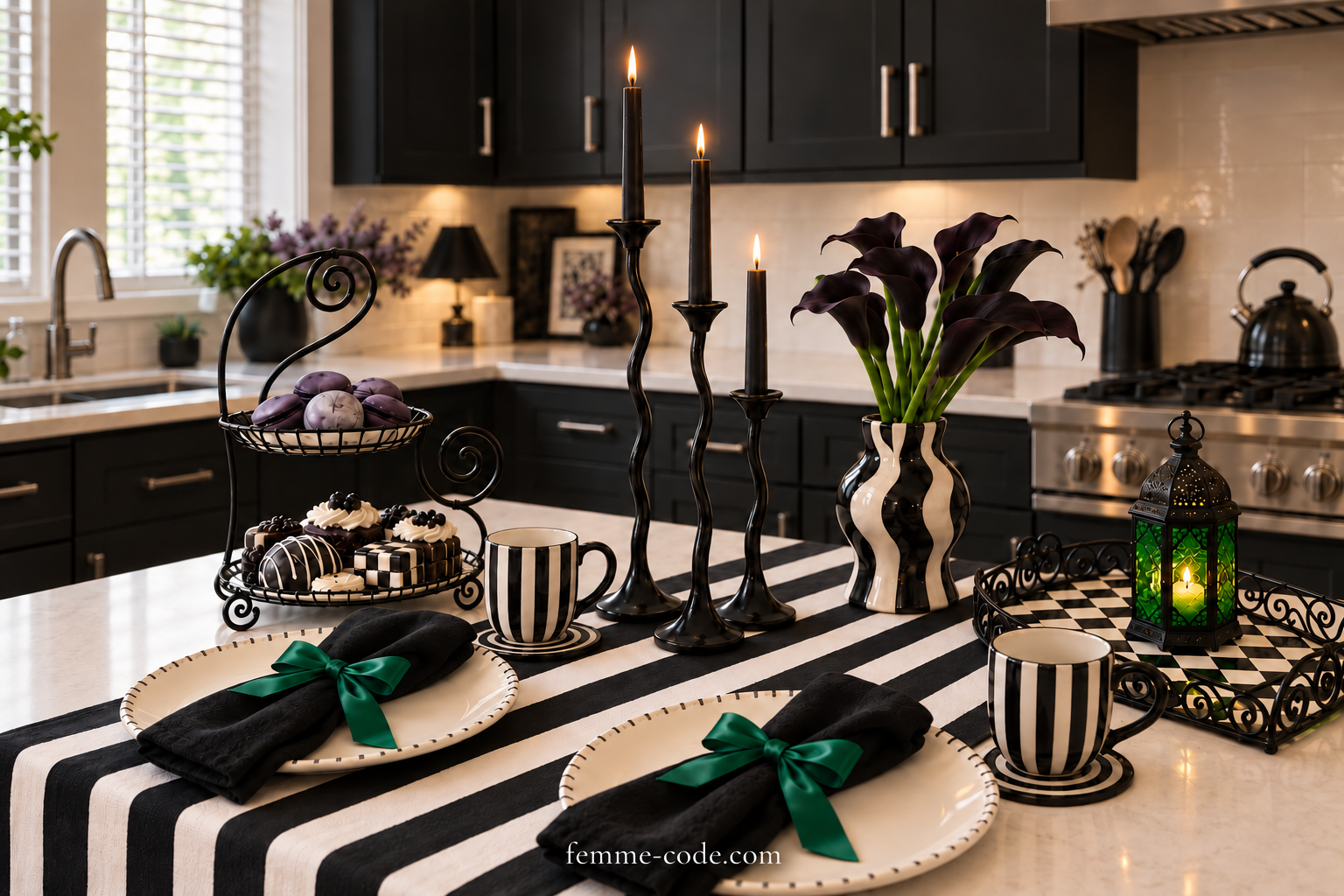
    Beetlejuice inspired dining table with black napkins and dark emerald bows

    A black-and-white striped table runner sets the foundation for the dining area. White plates, truly black napkins, and deep emerald-green bows make the place settings feel festive while connecting them to the kitchen.

    Black candleholders in different heights, black calla lilies, and striped mugs carry the palette across the table. Keep the green to a few small accents so black and white remain the main colors.

    5. Living Room: A Fireplace with Personality

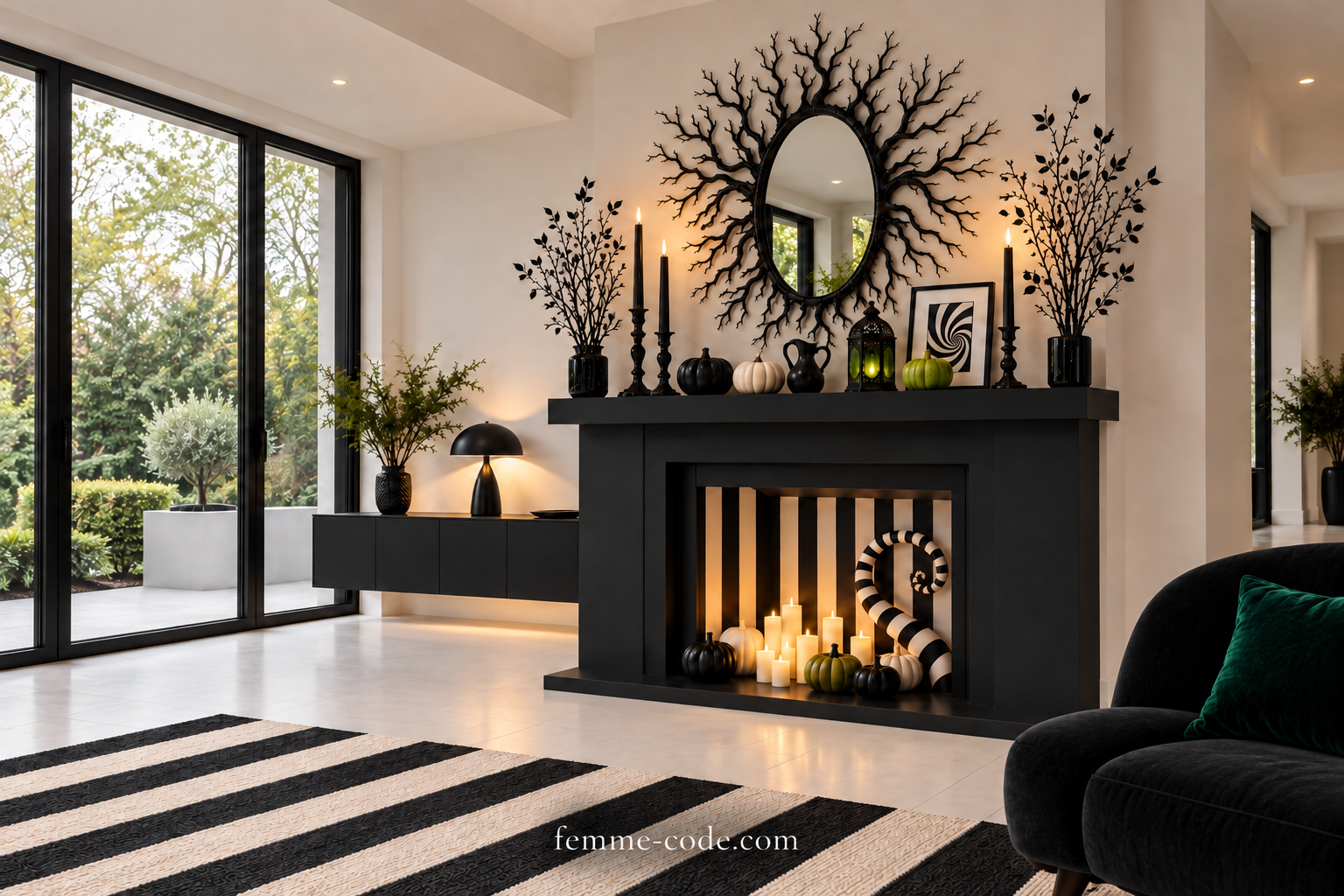
    Minimalist living room with matte black fireplace and branching mirror

    A smooth matte black fireplace becomes the living room’s focal point. Inside the firebox, a curling black-and-white sandworm against a striped background immediately recalls the world of Beetlejuice. Small black, white, and green pumpkins and candlelight complete the scene.

    Above the mantel, rootlike black branches extend from the mirror frame across the wall. This sculptural feature makes a strong impression, so the smaller objects can stay on the mantel. A wide striped rug, a black sofa, and an emerald-green velvet cushion finish the space.

    6. Bathroom: Spirals and Unexpected Light

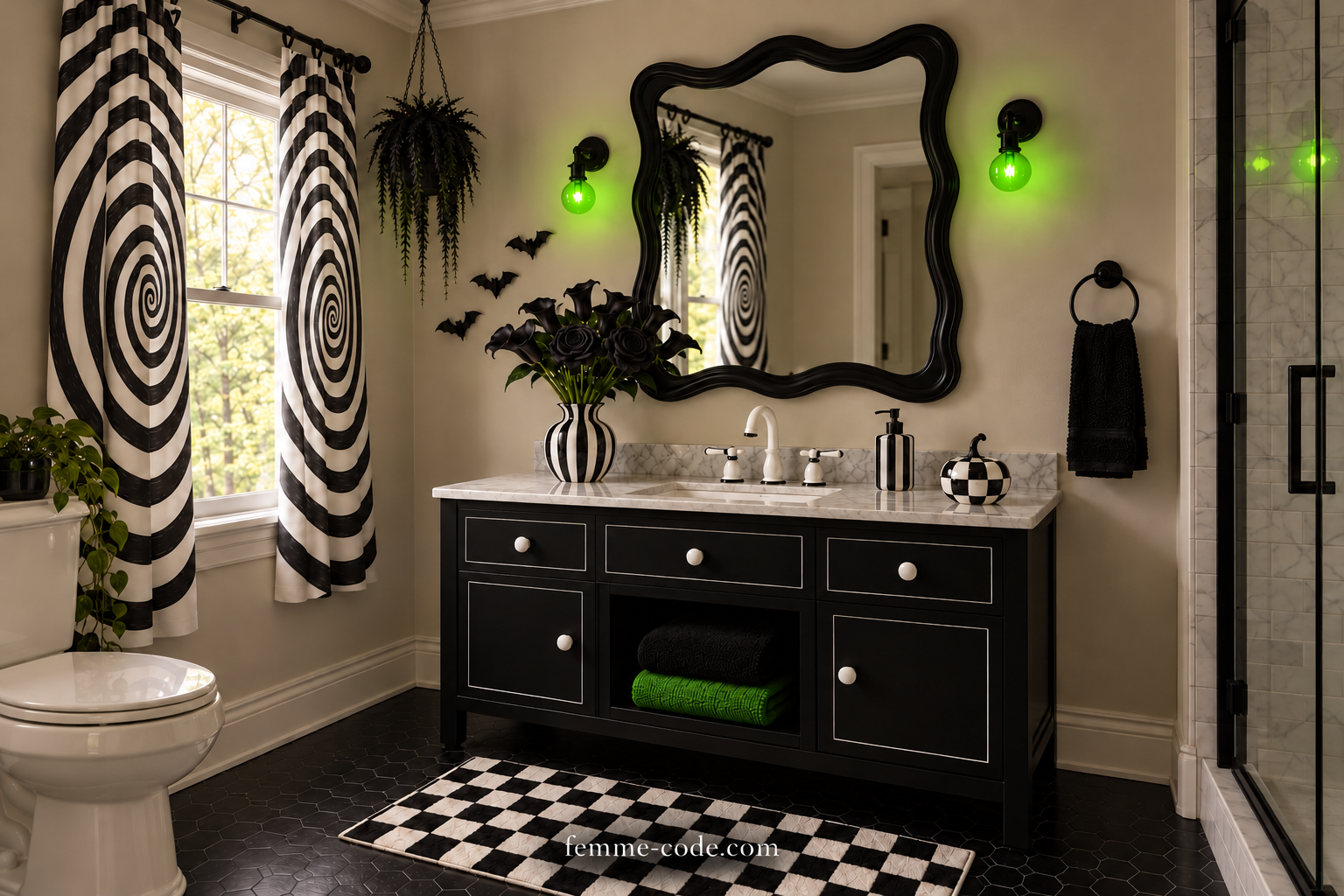
    Black vanity, spiral curtain and black roses in a Beetlejuice inspired bathroom

    In the bathroom, a black-and-white spiral-patterned curtain makes the boldest statement. Its movement is echoed by the wide, gently undulating black mirror frame, while the black vanity and light marble countertop give it a clean backdrop.

    Three black bats on the wall, a small checkered pumpkin, and black roses with dark calla lilies add Halloween character. Two green wall lights and a deeper green towel bring just enough color to energize the black-and-white room.

    What Ties It All Together?

    Repeat the black-and-white patterns and green accents, but give a different feature the spotlight in each space. The front door leads the porch, the striped wall defines the entryway, the floor anchors the kitchen, the fireplace commands the living room, and the spiral curtain transforms the bathroom.

    That way, the Beetlejuice inspiration remains recognizable throughout the home, with room for unusual shapes, candlelight, and your own taste.

    © Kamilla Csigás ✦FemmeCode — All Rights Reserved

  • Elegant Coffee Corners at Home: 10 Ideas for Small Kitchens

    Elegant Coffee Corners at Home: 10 Ideas for Small Kitchens

    An elegant coffee corner at home can fit on a spare section of kitchen counter, a narrow cabinet or a carefully placed tray. The essentials are simple: keep everyday tools within reach, adapt storage to the space and choose colours and materials that work with your kitchen.

    In a small kitchen, the items you choose make a noticeable difference. A beautiful cup, an easy-to-clean tray and a few organised containers can give your morning coffee spot a cohesive look. Black, off-white, dark wood and glass are elegant starting points; use the elements that already appear in your interior.

    The following ten ideas can be adapted to different layouts and routines. If you prefer tea or matcha, the same arrangements can help you create a tea corner.

    Where Should a Coffee Corner Go in a Small Kitchen?

    Start by finding a spot where you can comfortably prepare your drink. For an electrical appliance, access to a power socket matters, but so does room to remove the water tank, clean the machine and set down a cup.

    Before buying anything, measure the available width, depth and clear height above the surface. Plan appliance placement and surrounding clearance according to the manufacturer’s instructions.

    If your counter is already crowded, a nearby chest or narrow cabinet may be a better solution. Keep the work surface you use for daily food preparation clear.

    1. Arrange a Coffee Corner on a Countertop Tray

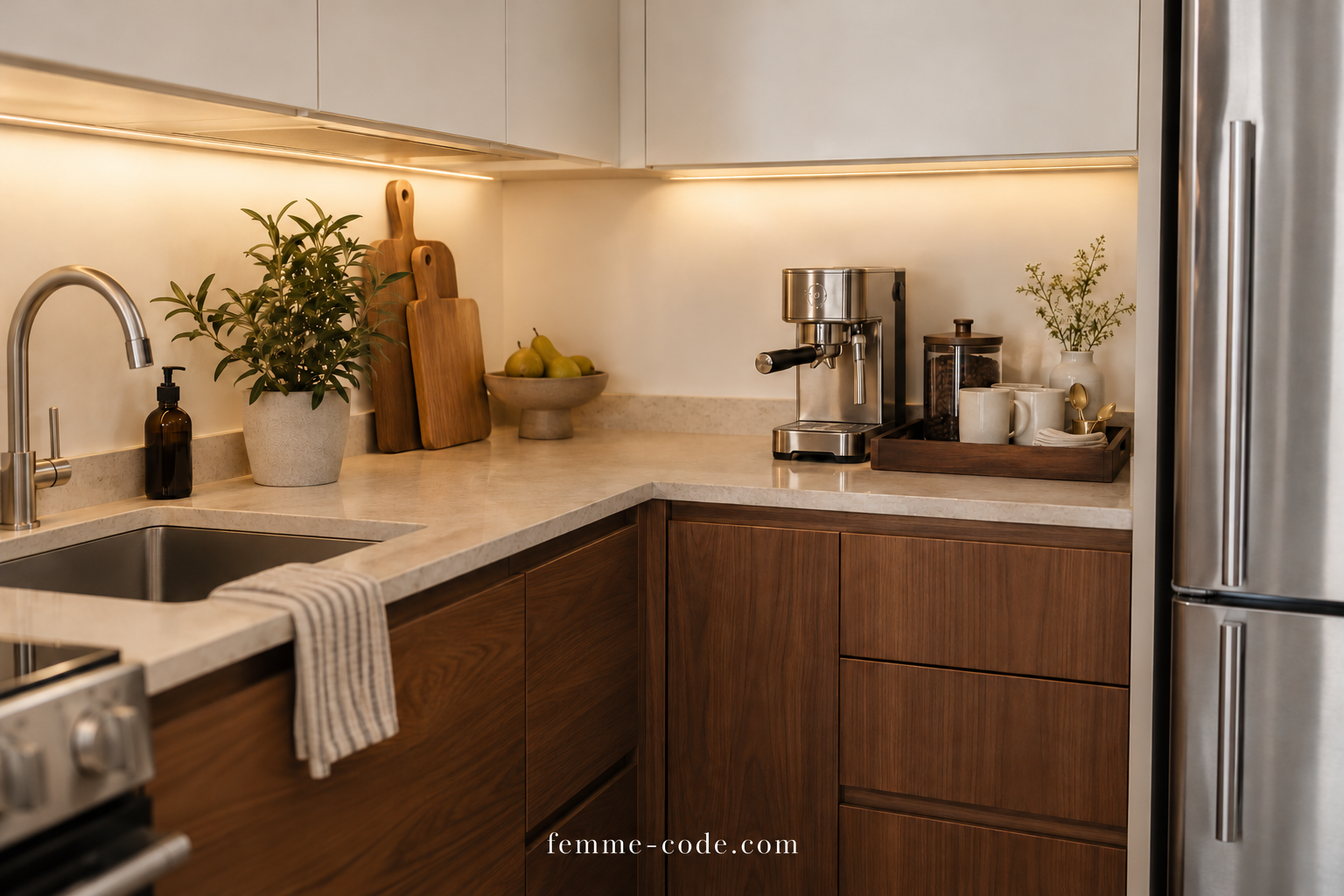
    Compact espresso machine and a walnut tray with cups and coffee storage on a small L-shaped kitchen counter.

    A tray is a simple way to define your coffee corner. It brings smaller items together and makes them easy to move when you clean the counter.

    Add two cups, a coffee canister and a small container for teaspoons. The machine can sit directly on the counter beside the tray; there is no need to squeeze every item onto a single surface.

    In a light kitchen, a black tray can give the arrangement a clear outline. On a dark countertop, wood or off-white ceramic creates a softer look. Choose a material that is easy to clean and suitable for everyday use.

    2. Create a Minimal Black-and-Off-White Coffee Corner

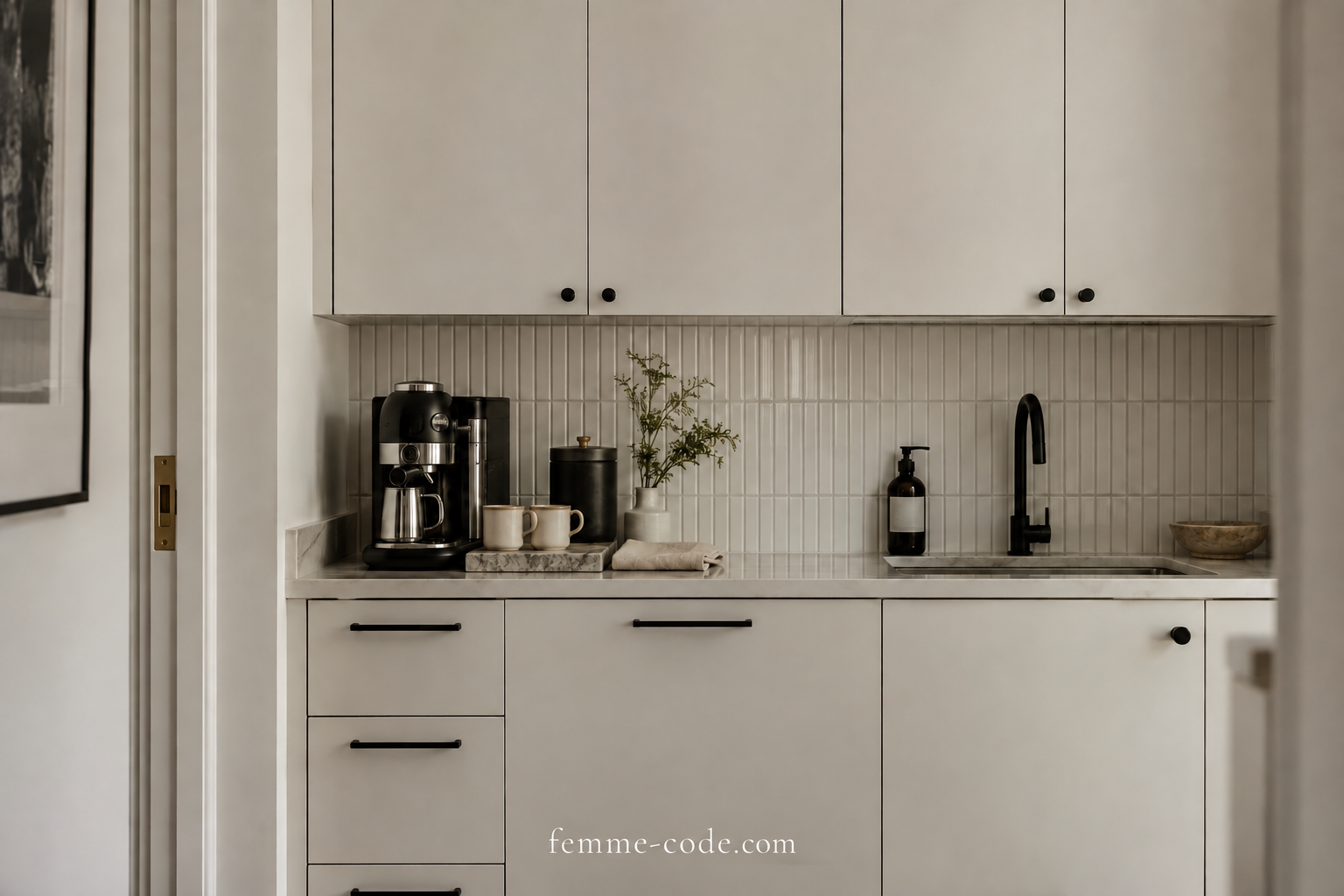
    Black coffee machine with ivory cups and a stone tray on a short white kitchen counter beside a small sink.

    Black and off-white work well together in a modern, understated interior. Different surfaces add interest: matte ceramic, glossy glass and a textured, stone-effect tray.

    Pair a black coffee machine with light cups, a simple storage canister and a linen napkin. If your machine is white or stainless steel, a few black accessories can connect the station to the rest of the kitchen.

    The palette feels more cohesive when it echoes cabinet handles, lighting or other small details. A single metallic element, such as a spoon or a tray handle, can add a subtle accent.

    3. Style a Modern Sideboard as a Coffee Station

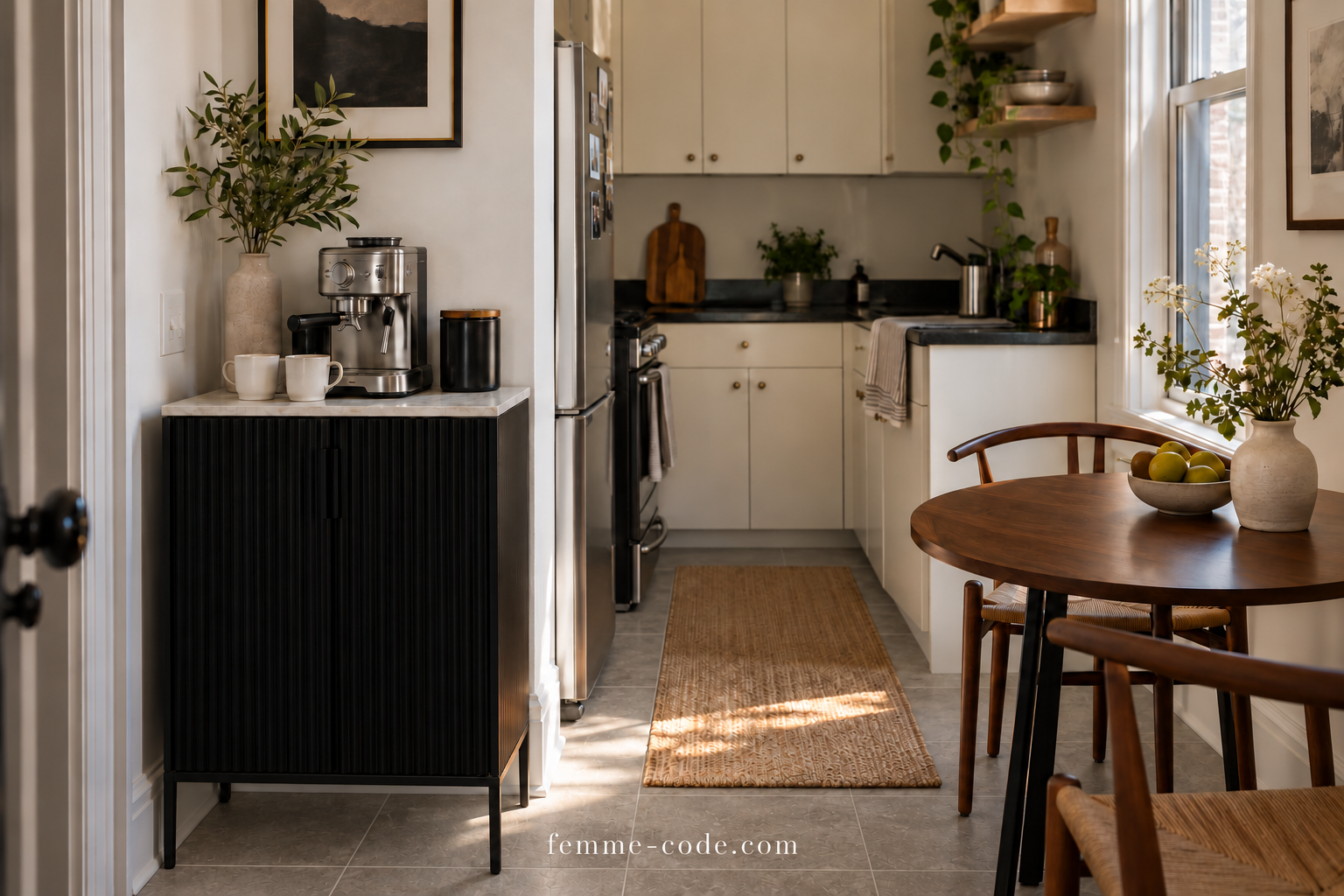
    A narrow black fluted coffee sideboard with espresso machine beside a small apartment kitchen and a two-seat dining nook.

    A compact modern sideboard can create a coffee station beside the kitchen or in an adjoining dining nook. Choose one with a stable top at a comfortable working height for preparing drinks, and closed storage for spare cups, napkins and unopened supplies. Select a size that suits the available wall without restricting movement around the dining area.

    For a refined look, pair a black sideboard with a pale stone top, white porcelain cups and stainless steel accessories. Subtle fluted fronts or slim silver handles can add texture without making the arrangement busy. Keep the machine and daily essentials on top, leaving a clear spot to set down a cup. A simple mirror above the unit can complete the setting where the room’s proportions allow.

    Check the sideboard’s stability, load capacity and surface suitability before placing an appliance on it. Protect sensitive finishes with an appropriate heat- and moisture-resistant surface, wipe up spills promptly and follow the coffee machine manufacturer’s placement and clearance instructions. Keep electrical access practical and cables away from walkways.

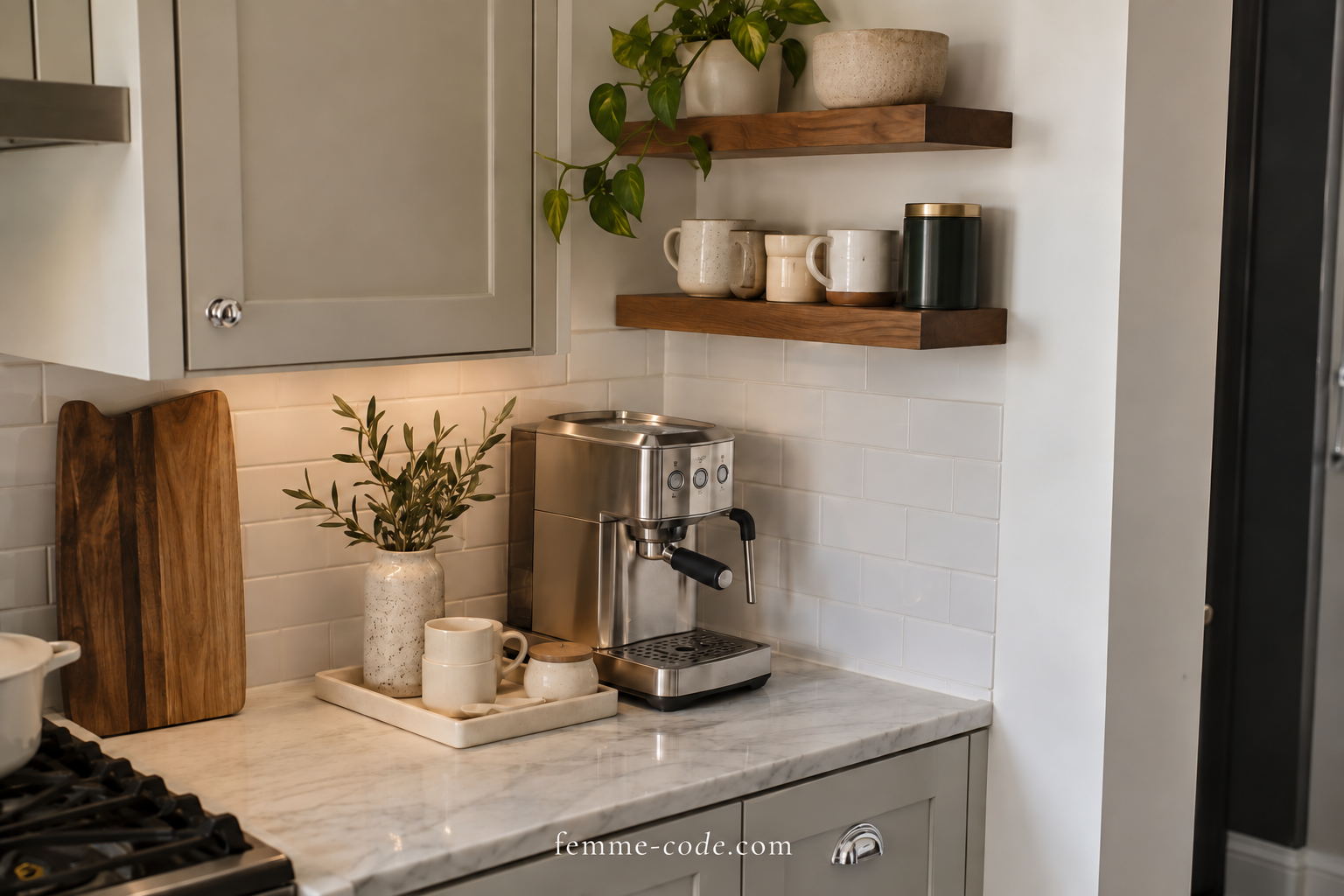
    4. Add Wall Shelves Above Your Coffee Corner

    Compact stainless steel espresso machine on a small kitchen counter with cups stored on shallow walnut wall shelves.

    When countertop space is limited, the wall above it can provide extra storage. A shallow shelf can hold a few cups, tea tins or a small decorative object.

    Keep frequently used items at an easy-to-reach height. Match the shelf width to the furniture below, and choose fixings suitable for the wall and the expected load.

    Leave the clearance required above the appliance. Keep sensitive wood, books and pictures away from the path of steam.

    A carefully arranged shelf can be both useful and decorative: a few coordinating cups are enough to create an attractive display.

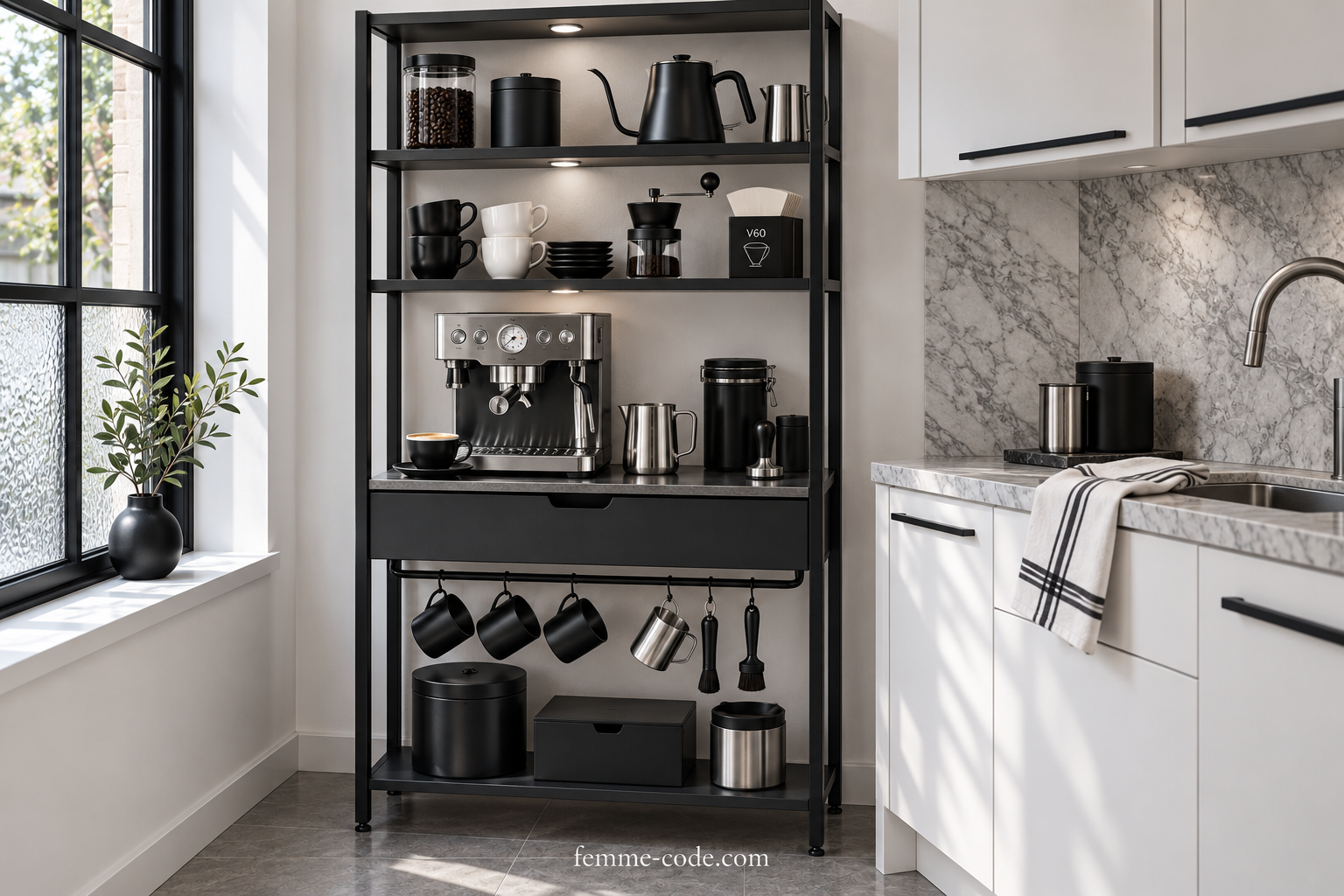
    5. Use a Narrow Freestanding Coffee Station

    Tall black open coffee shelving unit with a stainless steel espresso machine, black and white cups and coffee tools beside a window and white kitchen cabinets.

    A narrow freestanding unit can create a dedicated coffee station when the kitchen counter is full but a small space beside it or in the dining area is available. A tall, open shelving unit makes use of vertical space and keeps coffee-making essentials together.

    Place the machine on a stable, sufficiently deep surface at a comfortable working height. As shown here, use the open shelves above and below it for cups, saucers, a grinder and closed coffee containers, with hooks for a few cups or coffee tools. Leave room above the machine for refilling and follow the manufacturer’s clearance instructions. If you choose a different unit with a drawer, use it to store teaspoons and filters.

    Check the unit’s stability and the load capacity of each shelf, including the weight of the machine when filled with water. Secure tall furniture as its manufacturer directs. As an alternative to the open shelving unit pictured here, a serving cart can hold cups and supplies. Choose lockable wheels and only use an electrical appliance on it if both the furniture and appliance instructions allow it.

    Measure the furniture’s depth as well as its width, leaving space to walk past and open nearby doors and drawers. For a cohesive look, pair a black metal frame and anthracite shelves with a grey stone appliance surface and a few coordinating cups. Keep the shelves dedicated to the coffee supplies you actually use so the arrangement stays practical and uncluttered.

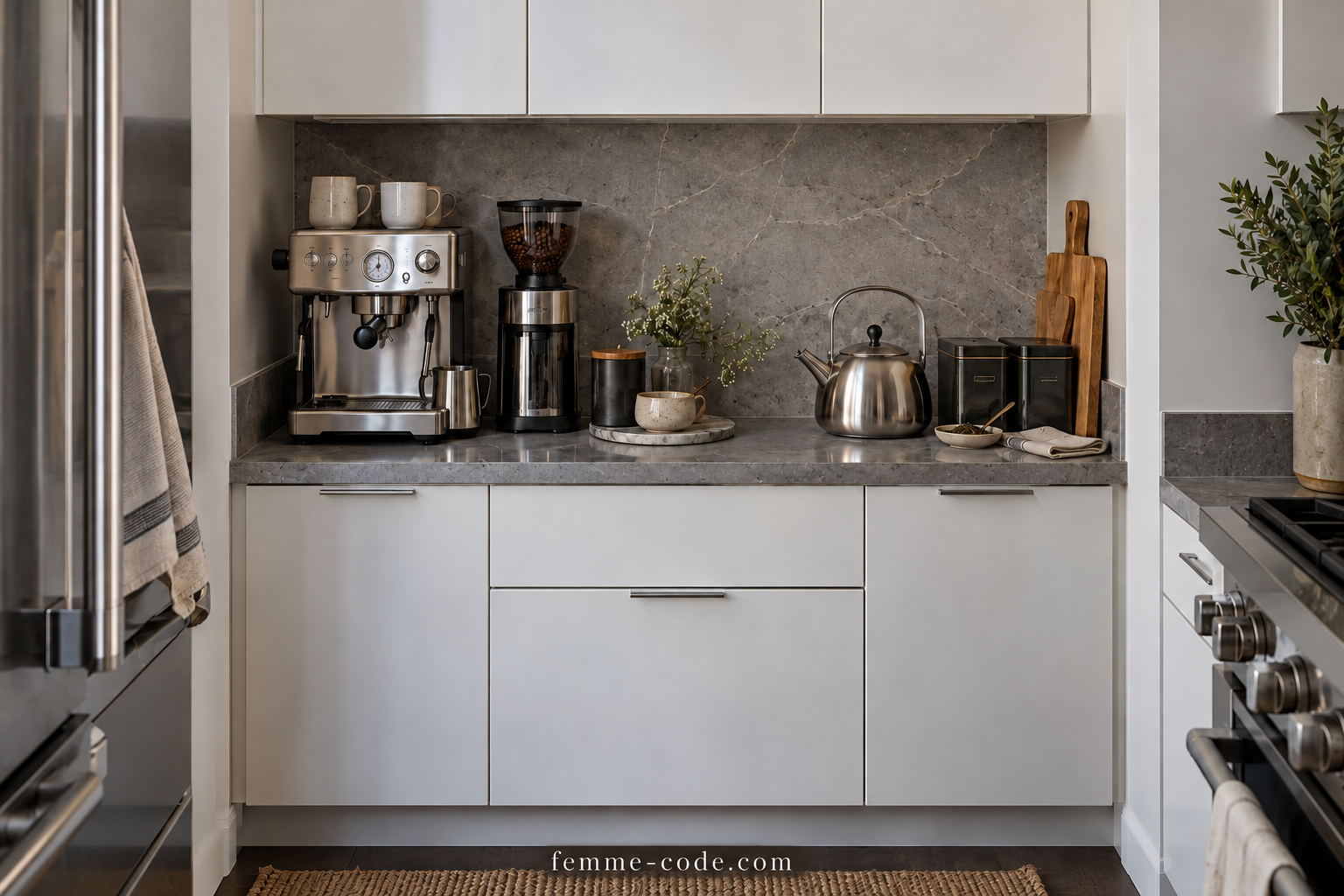
    6. Combine Coffee and Tea on One Surface

    Coffee machine and grinder beside teapot and tea tins on a short grey counter in a compact white kitchen.

    If your household enjoys both coffee and tea, create a shared station with separate areas on the same countertop. As shown here, group the coffee machine, grinder and coffee supplies on one side, and the teapot, tea tins and tea accessories on the other. Keep enough clear space between them to prepare and serve drinks comfortably.

    Keep daily essentials at the front and less frequently used accessories in a drawer. Store tea in closed containers and arrange cups together.

    For a coordinated look, choose cups in similar colours and storage containers that work well together. Labels are helpful when several similar boxes hold different ingredients.

    Let your routine guide the layout: give the easiest-to-reach space to the things you actually use.

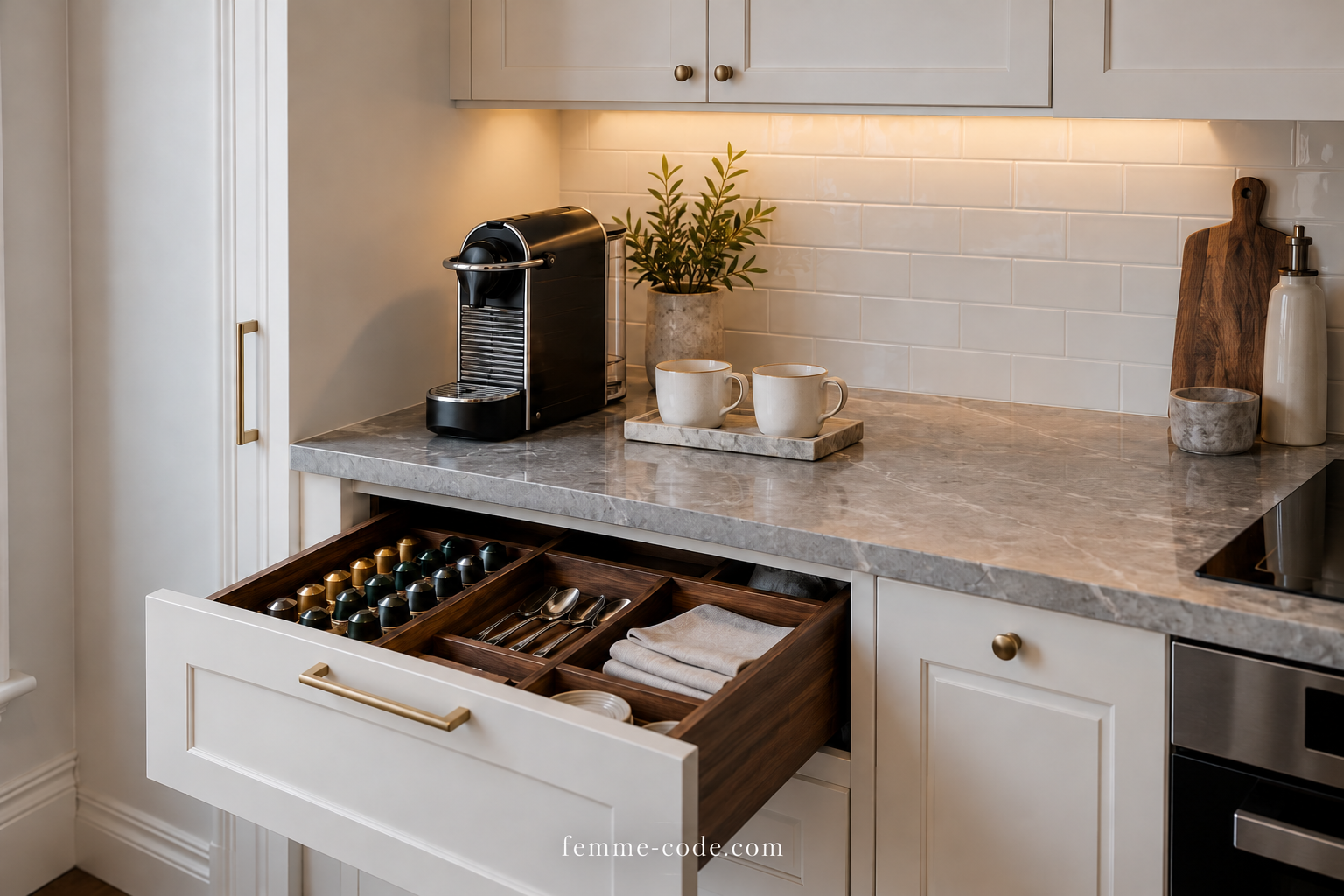
    7. Keep Supplies in Closed Storage

    Open kitchen drawer with organized coffee capsules, spoons and napkins beneath a compact coffee machine and two cups.

    If you prefer clear surfaces, most of your coffee supplies can go into a drawer or cupboard. Leave the machine, a few cups and a small tray on the counter.

    A drawer organiser can provide separate compartments for teaspoons, capsules and napkins. Keep unopened supplies farther back and everyday portions at the front.

    Plan cupboard storage and appliance operation separately. Only use an electrical coffee machine inside an enclosed space if the manufacturer permits it and all required conditions are met.

    8. Hide a Coffee Station Inside a Kitchen Cabinet

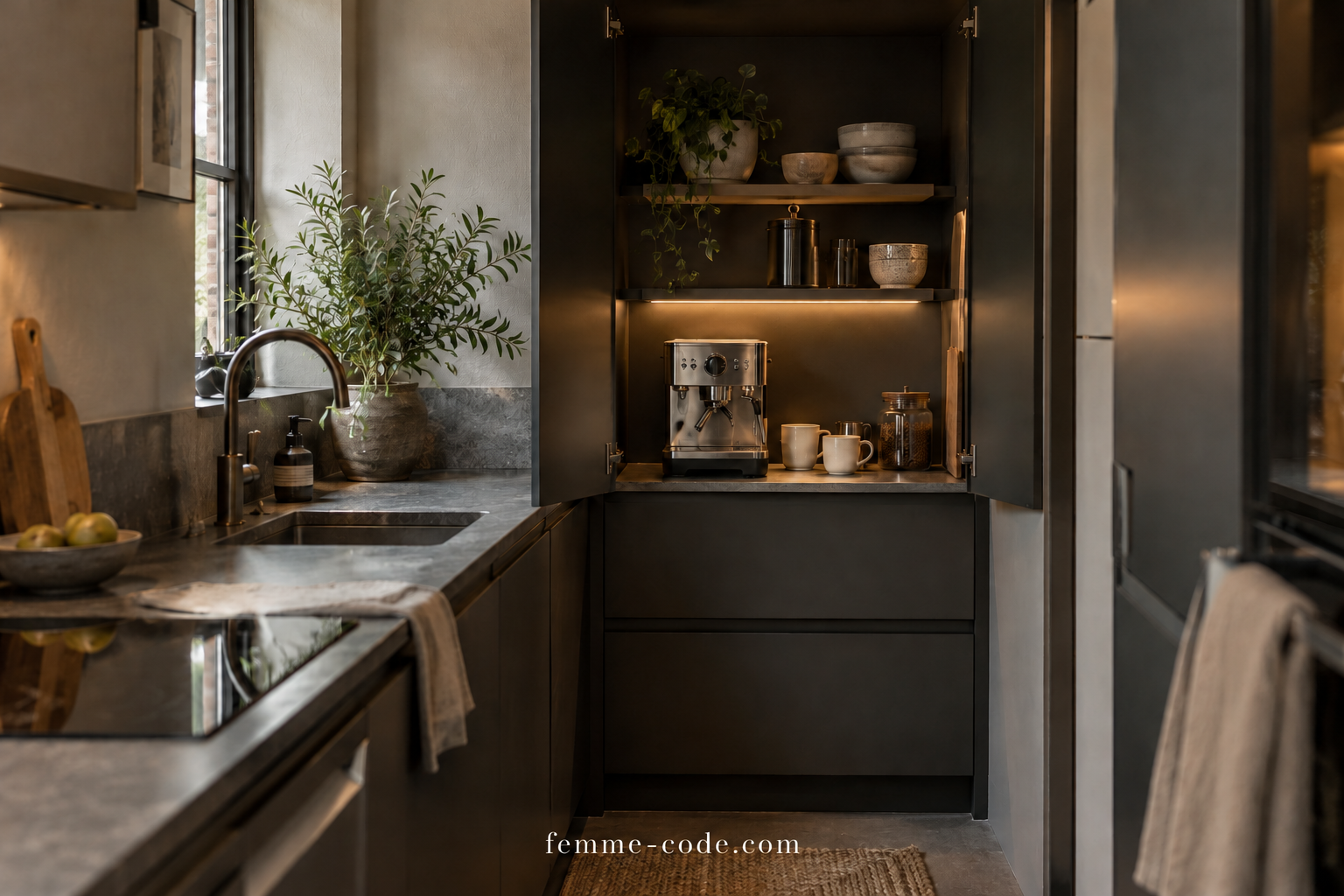
    Compact espresso machine, cups and coffee jar inside an open anthracite cabinet in a small galley kitchen.

    A hidden coffee station keeps the machine, cups and everyday supplies together behind cabinet doors. In a small kitchen, it can make use of an existing tall cabinet or a purpose-designed unit without adding another freestanding piece of furniture.

    Create a preparation surface at a comfortable height, with shallow shelves above for cups and closed containers. Leave enough space to access the water tank, clean the machine and prepare your drink. Check that the open doors do not obstruct nearby drawers or the walkway.

    For an elegant finish, pair matte anthracite cabinetry with a grey stone worktop, off-white ceramics and discreet shelf lighting. The doors conceal the station between uses, while the illuminated interior makes the arrangement easy to navigate when open.

    Plan appliance operation separately from storage. Only run a coffee machine inside a cabinet if the manufacturer permits that installation and the required ventilation, electrical access and clearances are provided. Keep the doors open during permitted operation, and otherwise use the machine on an approved open work surface.

    9. Pair a Coffee Corner with a Window Seat and Storage

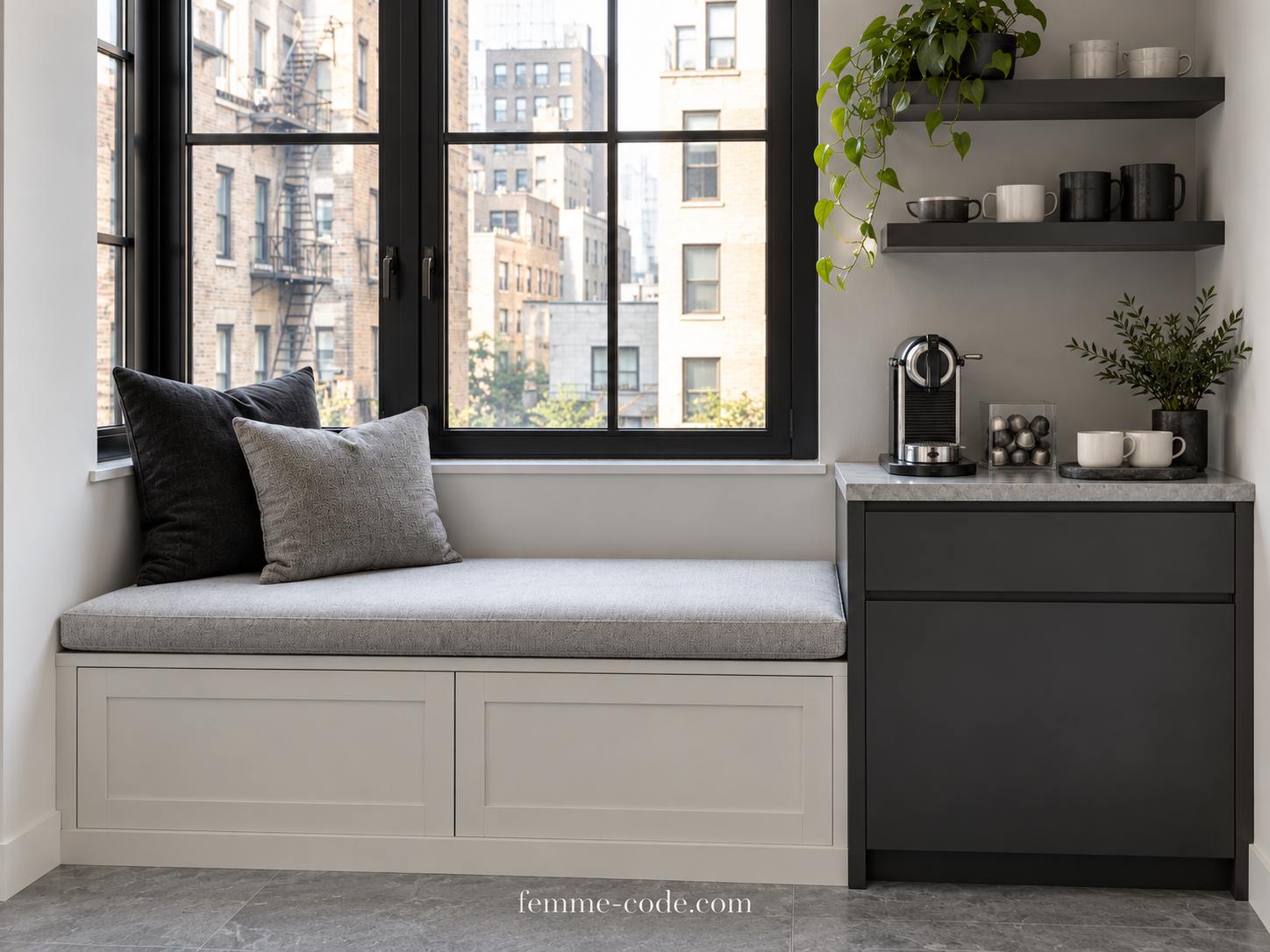
    Off-white storage bench beneath a tall black-framed window beside an anthracite coffee cabinet with a capsule machine, capsule holder and ivory cups.

    If your small kitchen has a window nook, pair a storage bench beneath the window with a narrow coffee cabinet beside it. This brings seating, extra storage and a place to prepare coffee together in one compact area.

    Keep the coffee machine on the cabinet’s stable worktop, separate from the upholstered seat. A small tray can hold two cups, while a capsule holder or closed coffee container keeps everyday supplies within reach. Use shallow wall shelves above the cabinet for additional cups without taking up more floor space.

    The bench can store spare napkins, table linens and less frequently used accessories. Choose lift-up storage or front-opening compartments to suit the space, and make sure you can reach the contents comfortably without moving the coffee equipment.

    For an elegant city-apartment look, combine off-white bench cabinetry, grey upholstery and an anthracite coffee cabinet with a stone top. Leave room for the window to open, preserve any required radiator ventilation and position the appliance according to the manufacturer’s instructions. A few cushions can make the nook inviting while keeping the arrangement easy to use.

    10. Create a Coffee Station on a Sturdy Wall Shelf

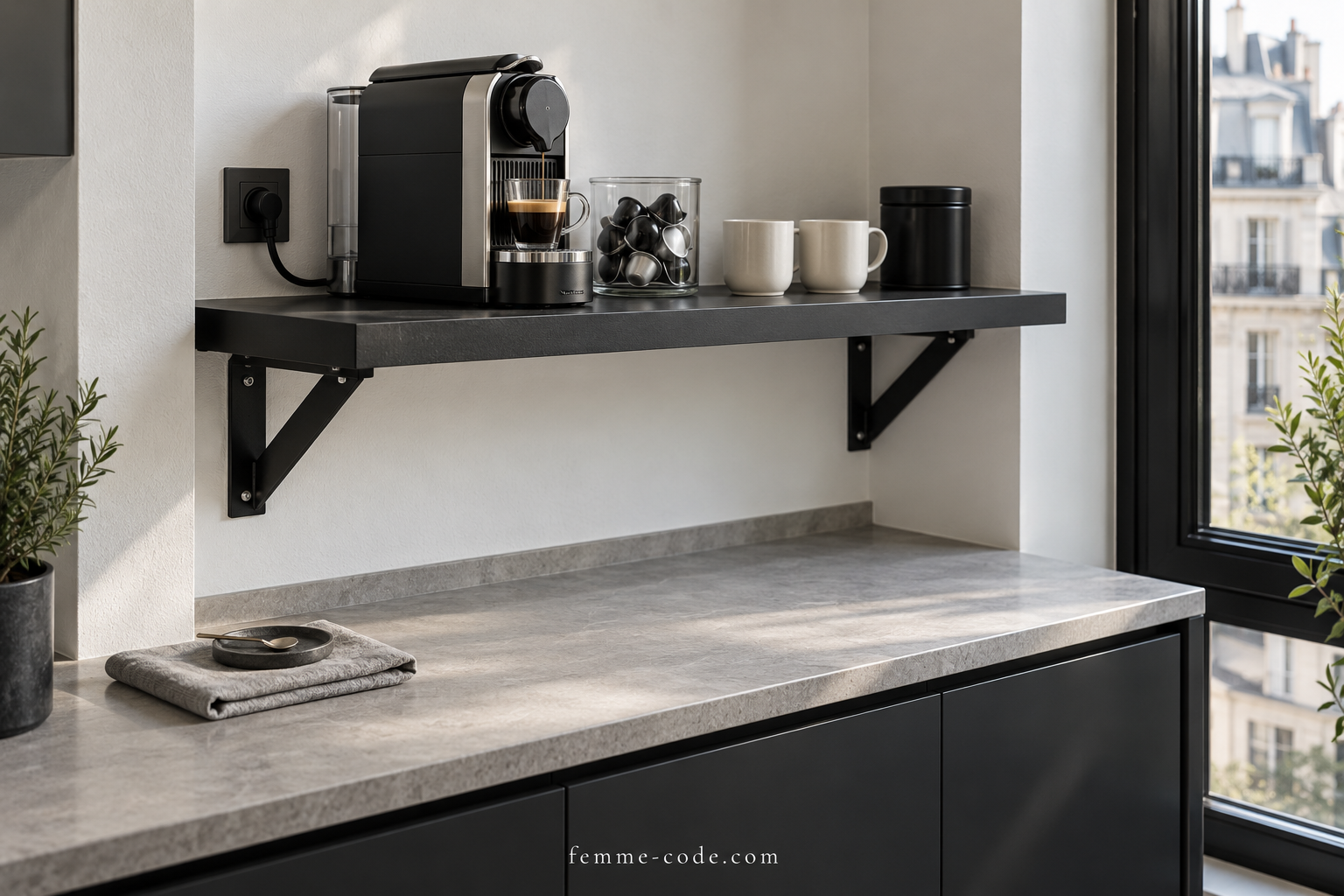
    Black capsule coffee machine, glass capsule jar and ivory cups on a bracket-supported anthracite wall shelf above a clear grey kitchen worktop.

    A purpose-designed wall shelf can hold the coffee machine and everyday essentials above the kitchen worktop, keeping the surface below available for preparation. Unlike a shelf used only for displaying cups, this becomes the working coffee station itself.

    Choose a shelf deep enough to support the appliance’s entire footprint, with space to set down a cup and access its controls. Position it at a comfortable working height so you can fill the water tank, insert capsules and clean the machine without stretching overhead.

    Have the shelf, brackets and wall fixings selected for the wall construction and the combined load of the machine, water and accessories. A decorative floating shelf is not automatically suitable. Follow the appliance manufacturer’s placement and clearance instructions, and arrange the cable so it stays away from water, heat and the preparation area.

    Keep the arrangement simple: a compact coffee machine, two cups and a small closed container or capsule holder may be enough. An anthracite shelf against a light wall, paired with a grey stone worktop, creates an understated finish. Leave the surface below mostly clear so the extra storage genuinely improves the kitchen’s usability.

    Which Accessories Should You Start With?

    First, take a look at what you already own. An existing tray, a few favourite cups and a suitable storage container may be enough for your first arrangement.

    If you buy new accessories, consider the following:

    • Tray: choose one that fits the designated space and is easy to clean.
    • Cups: select a size that suits your usual drink and fits your machine.
    • Coffee canister: prioritise a secure closure and materials suitable for food contact.
    • Drawer organiser: measure the inside of the drawer before buying.
    • Storage furniture: check dimensions, stability and load capacity.

    Base larger appliance purchases on how you will actually use them. Alongside a design that suits your interior, consider ease of cleaning and everyday operation.

    Frequently Asked Questions About Home Coffee Corners

    How can I create a coffee corner on a budget?

    Use items you already own and start by reorganising storage. A tray and a cleared drawer can make a noticeable difference. This also makes it easier to see what you really need.

    Do I need a separate piece of furniture?

    No. A designated section of kitchen counter can work well if it accommodates your equipment and leaves a usable preparation surface.

    How can I keep the coffee corner from looking cluttered?

    Keep everyday items at the front and store reserves out of sight. Leave a clear spot to set down a cup and prepare your drink.

    How can I refresh my coffee corner for autumn?

    A darker textile, a wooden tray or a richly coloured ceramic cup can subtly change the mood. Keep the surface easy to use when adding seasonal details.

    Start your own coffee corner with one simple step: choose its location and place the tools you reach for every morning there. Let your daily routine shape the final arrangement.

    Paid link.
    Shop Coffee Corner Essentials →

    © Kamilla Csigás ✦FemmeCode — All Rights Reserved

  • Halloween Doesn’t Have to Be Orange: 7 Dark & Elegant Halloween Decor Ideas

    Halloween Doesn’t Have to Be Orange: 7 Dark & Elegant Halloween Decor Ideas

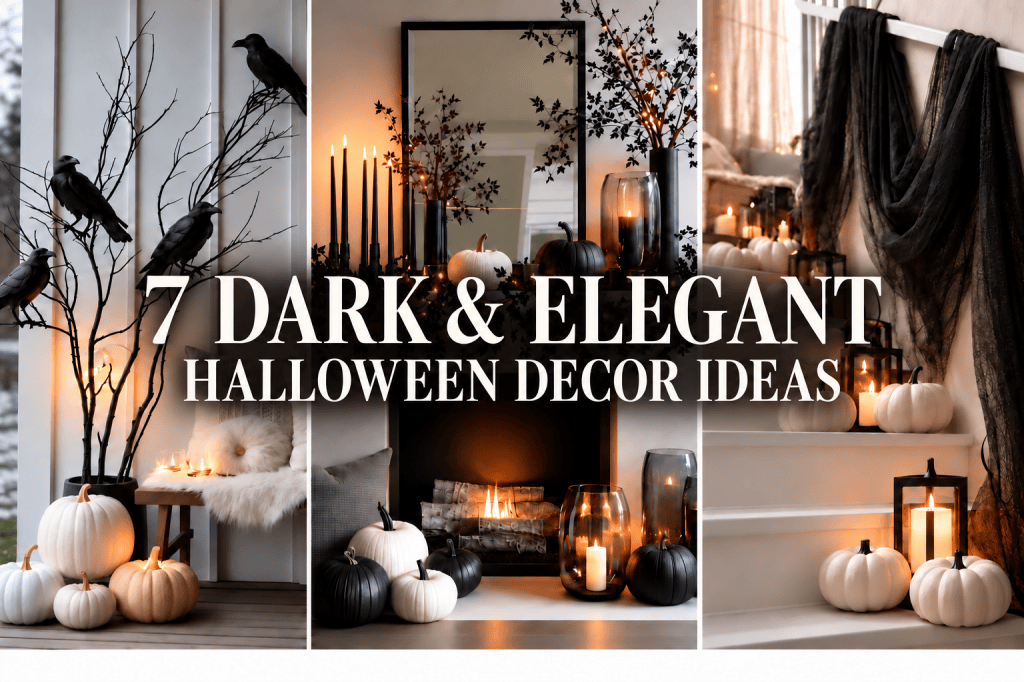
    How to Create a Sophisticated Gothic Interior for the Spooky Season Halloween decorating doesn’t have to mean bright orange pumpkins, plastic spiders, and novelty decorations covering every surface. This year, take a darker approach.

    Think black candlelight, deep burgundy velvet, smoked glass, antique silver, sculptural details, and carefully placed gothic accents. The kind of Halloween decor that feels less like a themed party and more like an editorial interior transformed for October. The secret is not adding more.

    It is choosing better.

    If your personal style leans toward dark feminine interiors, modern gothic decor, or simply a more sophisticated aesthetic, you don’t have to abandon it when Halloween arrives. Instead, let the season become a darker extension of the home you already love. Here are seven ways to create an elegant Halloween interior without relying on traditional orange decor.

    1. Forget Orange: Build a Dark Halloween Color Palette

    The easiest way to make Halloween decor feel more sophisticated is to rethink the traditional color palette.

    Instead of filling the room with bright orange and purple, build your Halloween interior around shades that already feel luxurious:

    Black, ivory, deep burgundy, plum, charcoal, smoked grey, antique silver, and muted metallics.

    Black immediately creates contrast and drama, while ivory prevents the space from becoming visually heavy. Burgundy and plum introduce richness without losing the moody atmosphere.

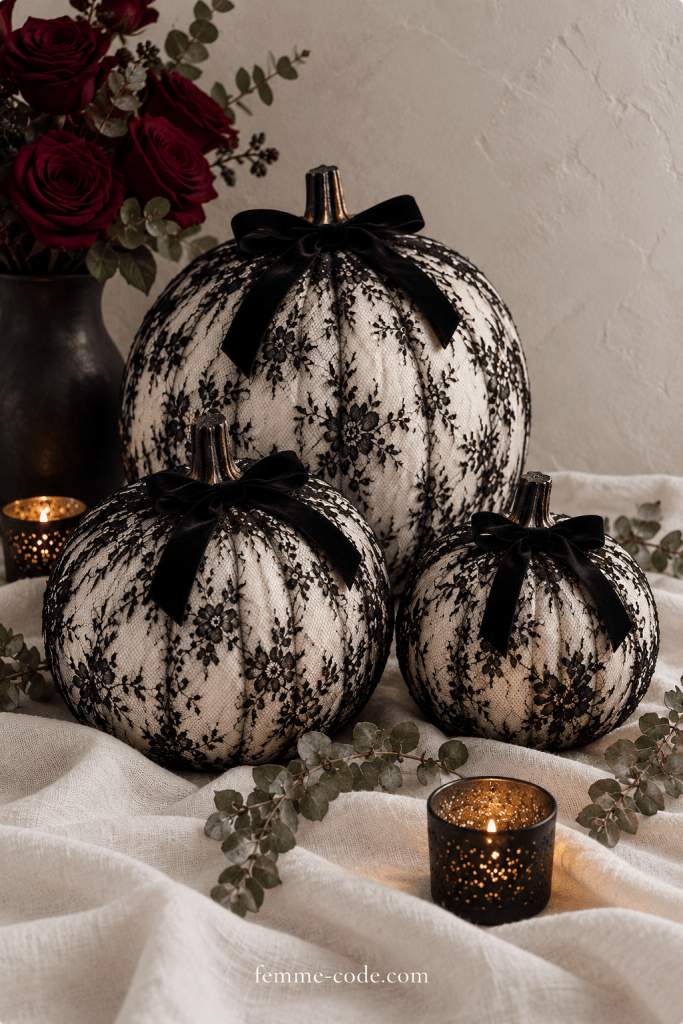
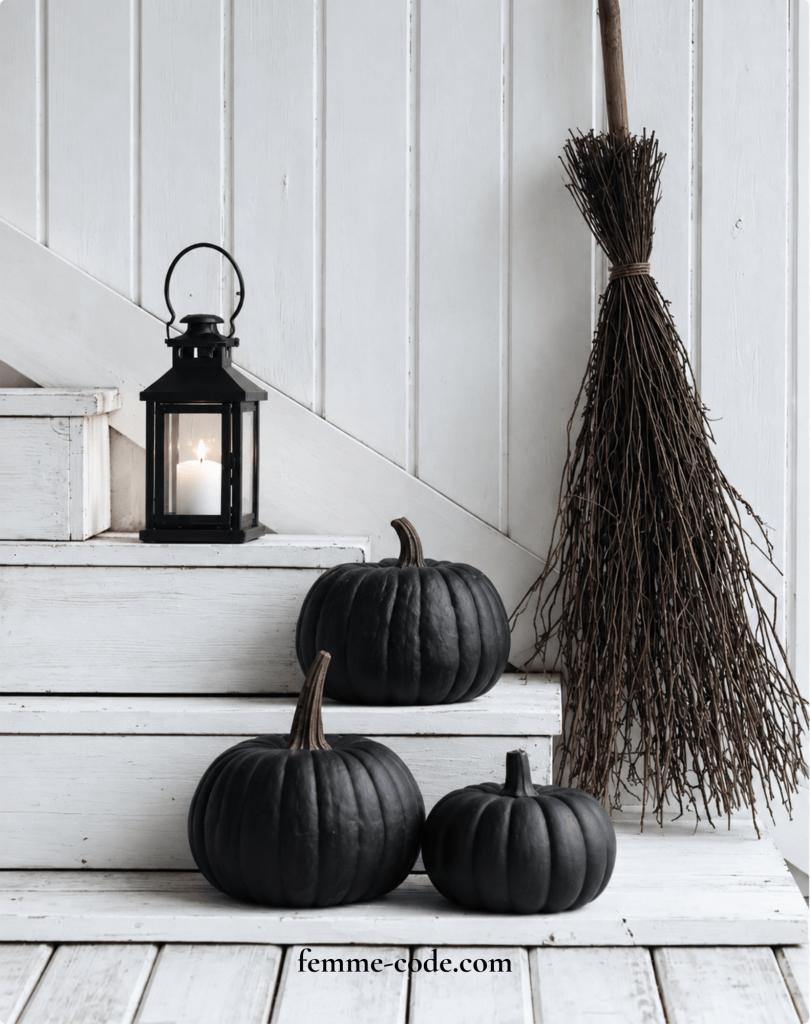
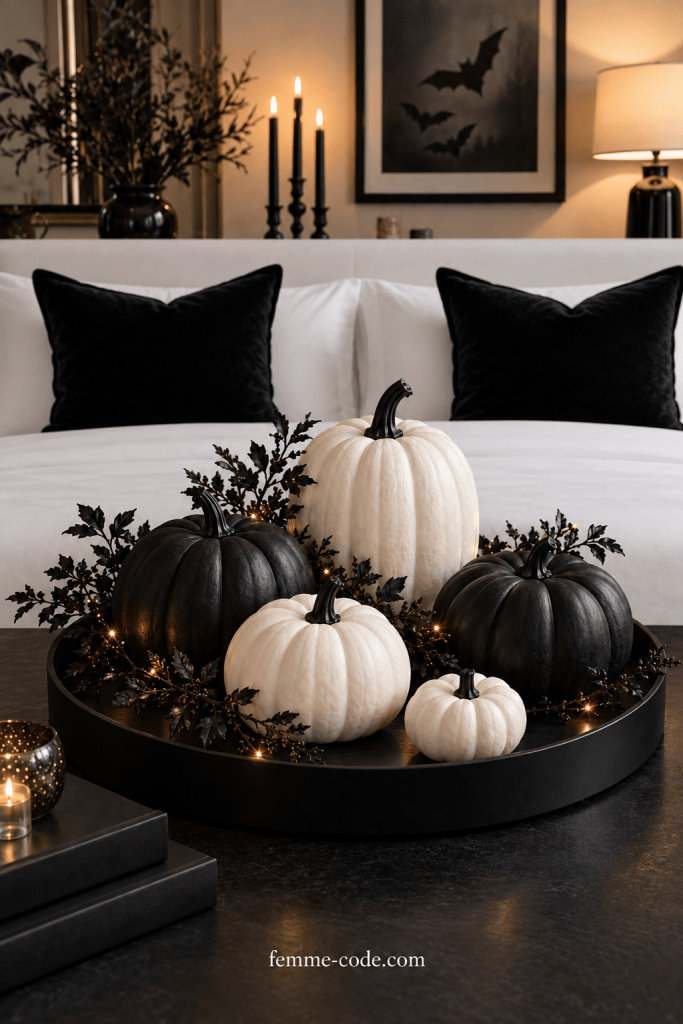
    Even pumpkins can follow this palette. Black, white, ivory, velvet, or subtly metallic pumpkins can create the seasonal feeling without dominating the room. The result is still unmistakably Halloween — just darker, quieter, and more refined.

    2. Use Texture Instead of More Decoration

    One of the easiest mistakes to make with seasonal decorating is assuming that more objects create more atmosphere. Often, texture does the job better.

    Velvet pumpkins, distressed metal, aged silver, dark wood, smoked glass, linen, black gauze, and heavier textiles can completely change the mood of a room without filling every surface with Halloween decorations.

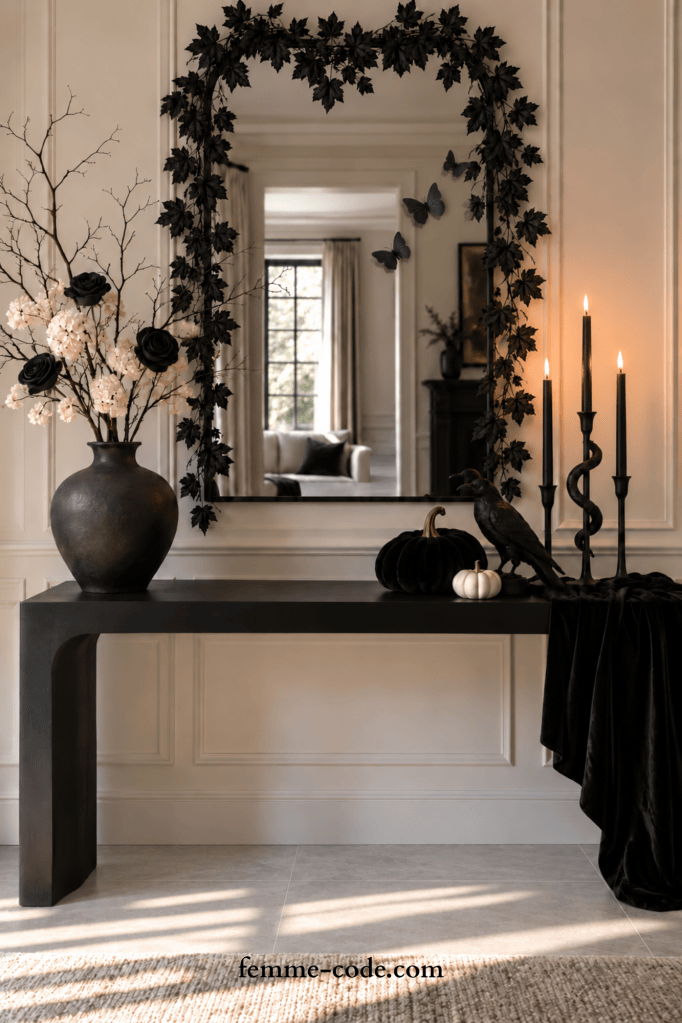
    Try layering a dark throw over a chair, adding velvet cushions to a sofa, or placing a few sculptural objects on an otherwise minimal console.

    Texture creates depth.

    And when you are working with a limited dark color palette, that depth becomes especially important.

    3. Let Candlelight Change the Room

    Few things transform an interior as quickly as candlelight.

    Black taper candles in sculptural holders, clusters of pillar candles, smoked-glass votives, or realistic flameless candles can create an atmospheric glow without requiring much additional decoration.

    Instead of lighting every corner of the room, allow some areas to remain darker.

    The contrast between light and shadow is part of what makes a gothic-inspired Halloween interior feel mysterious and intimate.

    Place candles at different heights on a mantel, dining table, sideboard, or console. Antique silver and black candle holders work particularly well because they can remain part of your interior long after October ends.

    For a more dramatic effect, warm flickering lighting can completely change the atmosphere of an entryway or living room after sunset.

    4. Pumpkins — Without the Orange

    Pumpkins are one of the strongest visual symbols of autumn and Halloween, so there is no reason to remove them entirely.

    Just change the palette.

    Look for black, ivory, white, striped, velvet, or metallic pumpkins instead of the traditional bright orange versions.

    A small group of differently sized pumpkins usually looks more intentional than scattering dozens around the room.

    Try arranging three or five together on a console, mantel, or dining table and combine them with candles, dark foliage, or antique-inspired accessories.

    The shape still communicates autumn.

    The color keeps it elegant.

    5. Add Gothic Details — But Choose Them Carefully

    Gothic Halloween decor works best when it feels intentional rather than theatrical. You don’t need to transform your entire home into a haunted house.

    A few carefully selected details can create far more impact: black bats climbing across a wall, a raven placed beside candles, an antique-inspired mirror, dark botanical elements, sculptural candle holders, or subtle snake motifs.

    The key is restraint.

    Choose pieces that could almost belong in your home outside Halloween season. This makes the interior feel curated rather than temporarily covered in decorations. For a dark feminine aesthetic, gothic details can also be balanced with softer elements such as velvet, flowers, glass, and candlelight.

    Dark doesn’t have to mean harsh.

    6. Create One Halloween Moment Instead of Decorating Everything

    You don’t have to decorate every room.

    Sometimes one beautifully styled area creates a stronger impression than Halloween decorations scattered throughout the entire home. Choose a focal point: a fireplace mantel, entryway console, bookshelf, coffee table, or sideboard. Then build one complete visual story around it.

    For example: black and ivory pumpkins, tall black candles, a few bats climbing the wall behind them, smoked glass, and one dramatic branch arrangement.

    Keeping the rest of the room relatively simple allows that single Halloween moment to become the focal point.

    It also makes seasonal decorating much easier to style — and eventually remove.

    7. Create a Dark Halloween Tablescape

    The dining table is one of the easiest places to experiment with a more dramatic Halloween aesthetic.

    Start with a dark foundation: black or charcoal textiles, deep burgundy napkins, or a simple neutral table.

    Then layer in candlelight, smoked glass, antique silver, black details, and small seasonal accents.

    Avoid trying to make every item Halloween-themed.

    Your glasses do not need bats on them. Your plates do not need pumpkins.

    Instead, let the atmosphere communicate the season.

    A few black taper candles, miniature pumpkins, and one darker centerpiece can be enough to turn an ordinary dinner table into an elegant Halloween setting.

    The Best Halloween Decor Is the Kind You Would Keep

    Seasonal decorating becomes much more interesting when you stop buying objects simply because they have “Halloween” written on them.

    Choose pieces you would genuinely want in your home.

    A beautiful black candle holder can stay after October. So can smoked glass, velvet cushions, antique-inspired mirrors, dark vases, and sculptural accessories.

    Then Halloween becomes less about temporarily changing your style and more about revealing its darker side.

    You don’t need orange everywhere.

    You don’t need plastic decorations covering every surface.

    And you certainly don’t need to turn your home into a costume.

    Halloween can be dark, feminine, atmospheric, and sophisticated.

    Sometimes all it takes is candlelight, shadow, texture — and a little black.

    Paid link.
    Shop The Halloween Edit →

  • Dark Feminine Interior Design – The Darker Side of Feminine Elegance

    Dark Feminine Interior Design – The Darker Side of Feminine Elegance

    Black, Burgundy and Timeless Luxury Interiors

    Dark feminine interior design has gained increasing attention in the world of luxury interiors over recent years. While many associate it with black walls or gothic aesthetics, the style is far more sophisticated than a simple color palette.

    At its core, dark feminine design represents a deeper, more mature expression of femininity. It moves away from sterile minimalism and embraces spaces with character, atmosphere, and intention.

    These interiors often feature rich burgundy tones, black wall paneling, dark woods, marble surfaces, velvet upholstery, and refined metallic accents. Together, these elements create an environment that feels elegant, sensual, and timeless.

    The Power of Color

    Color plays a central role in defining the dark feminine aesthetic. Black provides depth, sophistication, and architectural presence, while burgundy introduces warmth, richness, and a distinctly feminine touch.

    Lighter elements such as ivory, soft cream, and white marble create balance, preventing the space from feeling overwhelming or heavy. This contrast between dark and light is frequently found in luxury hotels, penthouses, and high-end residences because it creates a sense of drama without sacrificing elegance.

    Materials and Texture

    One of the defining characteristics of dark feminine interiors is their layered use of texture.

    Velvet, silk, crystal, polished marble, dark wood, and brushed metals are commonly used to create visual depth and tactile richness.

    A burgundy velvet sofa, a black marble coffee table, or floor-to-ceiling velvet drapery can instantly transform a room, adding both sophistication and intimacy. The goal is not excess, but carefully curated luxury.

    Art Deco Influences

    Many contemporary dark feminine interiors draw inspiration from the Art Deco movement.

    Geometric patterns, black-and-white marble floors, gilded details, dramatic mirrors, and architectural symmetry are recurring elements that connect the style to the glamour of the 1920s.

    The result is a unique blend of classic elegance and modern luxury. This is one reason why the aesthetic is frequently seen in boutique hotels, upscale restaurants, and luxury residences in cities such as New York, Paris, and London.

    The Importance of Lighting

    In dark feminine design, lighting is just as important as furniture and décor.

    Crystal chandeliers, wall sconces, warm ambient lighting, and candlelight contribute to the atmosphere by highlighting textures, materials, and architectural details.

    Rather than flooding a room with light, the focus is on creating contrast and mood through the interplay of light and shadow.

    More Than a Design Style

    The growing popularity of dark feminine interiors reflects a broader shift in design preferences.

    Many people are moving away from trend-driven spaces and seeking interiors that feel personal, expressive, and emotionally resonant.

    Dark feminine design offers exactly that.

    It embraces depth rather than simplicity, character rather than perfection, and elegance without the need for excess.

    The combination of black, burgundy, marble, velvet, crystal, and metallic accents creates interiors that feel confident, luxurious, and unmistakably memorable.