
An elegant coffee corner at home can fit on a spare section of kitchen counter, a narrow cabinet or a carefully placed tray. The essentials are simple: keep everyday tools within reach, adapt storage to the space and choose colours and materials that work with your kitchen.
In a small kitchen, the items you choose make a noticeable difference. A beautiful cup, an easy-to-clean tray and a few organised containers can give your morning coffee spot a cohesive look. Black, off-white, dark wood and glass are elegant starting points; use the elements that already appear in your interior.
The following ten ideas can be adapted to different layouts and routines. If you prefer tea or matcha, the same arrangements can help you create a tea corner.
Where Should a Coffee Corner Go in a Small Kitchen?
Start by finding a spot where you can comfortably prepare your drink. For an electrical appliance, access to a power socket matters, but so does room to remove the water tank, clean the machine and set down a cup.
Before buying anything, measure the available width, depth and clear height above the surface. Plan appliance placement and surrounding clearance according to the manufacturer’s instructions.
If your counter is already crowded, a nearby chest or narrow cabinet may be a better solution. Keep the work surface you use for daily food preparation clear.
1. Arrange a Coffee Corner on a Countertop Tray
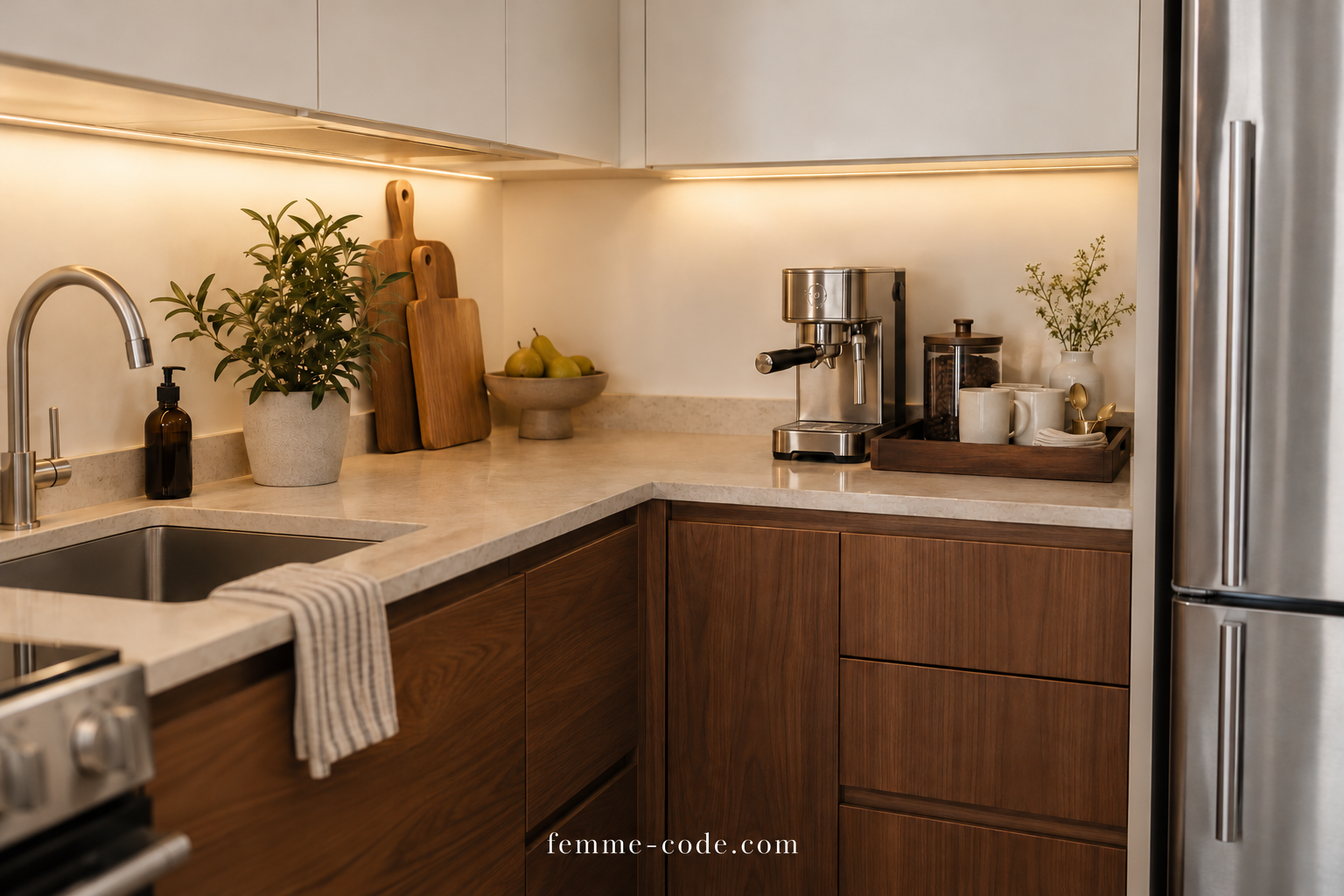
A tray is a simple way to define your coffee corner. It brings smaller items together and makes them easy to move when you clean the counter.
Add two cups, a coffee canister and a small container for teaspoons. The machine can sit directly on the counter beside the tray; there is no need to squeeze every item onto a single surface.
In a light kitchen, a black tray can give the arrangement a clear outline. On a dark countertop, wood or off-white ceramic creates a softer look. Choose a material that is easy to clean and suitable for everyday use.
2. Create a Minimal Black-and-Off-White Coffee Corner
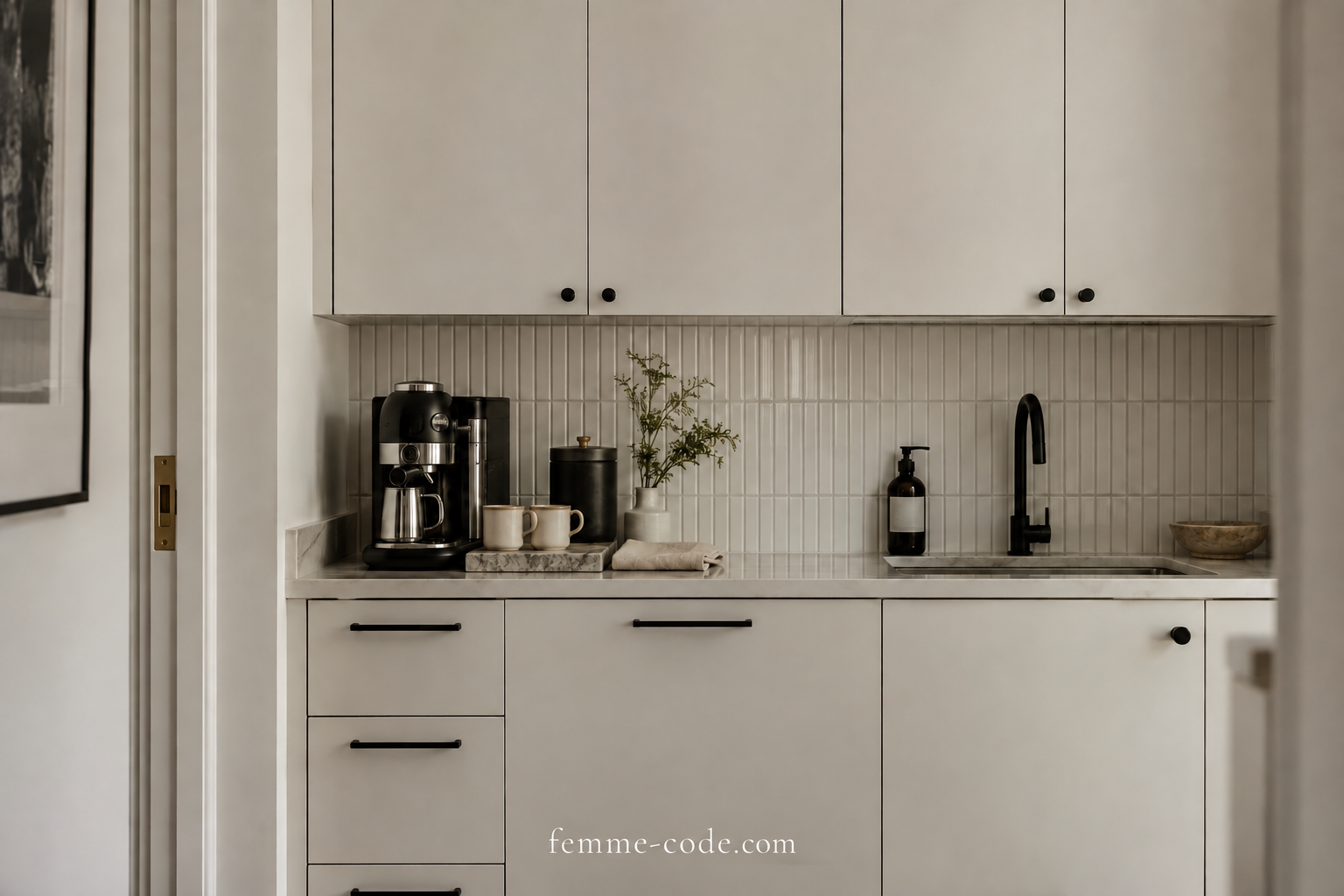
Black and off-white work well together in a modern, understated interior. Different surfaces add interest: matte ceramic, glossy glass and a textured, stone-effect tray.
Pair a black coffee machine with light cups, a simple storage canister and a linen napkin. If your machine is white or stainless steel, a few black accessories can connect the station to the rest of the kitchen.
The palette feels more cohesive when it echoes cabinet handles, lighting or other small details. A single metallic element, such as a spoon or a tray handle, can add a subtle accent.
3. Style a Modern Sideboard as a Coffee Station
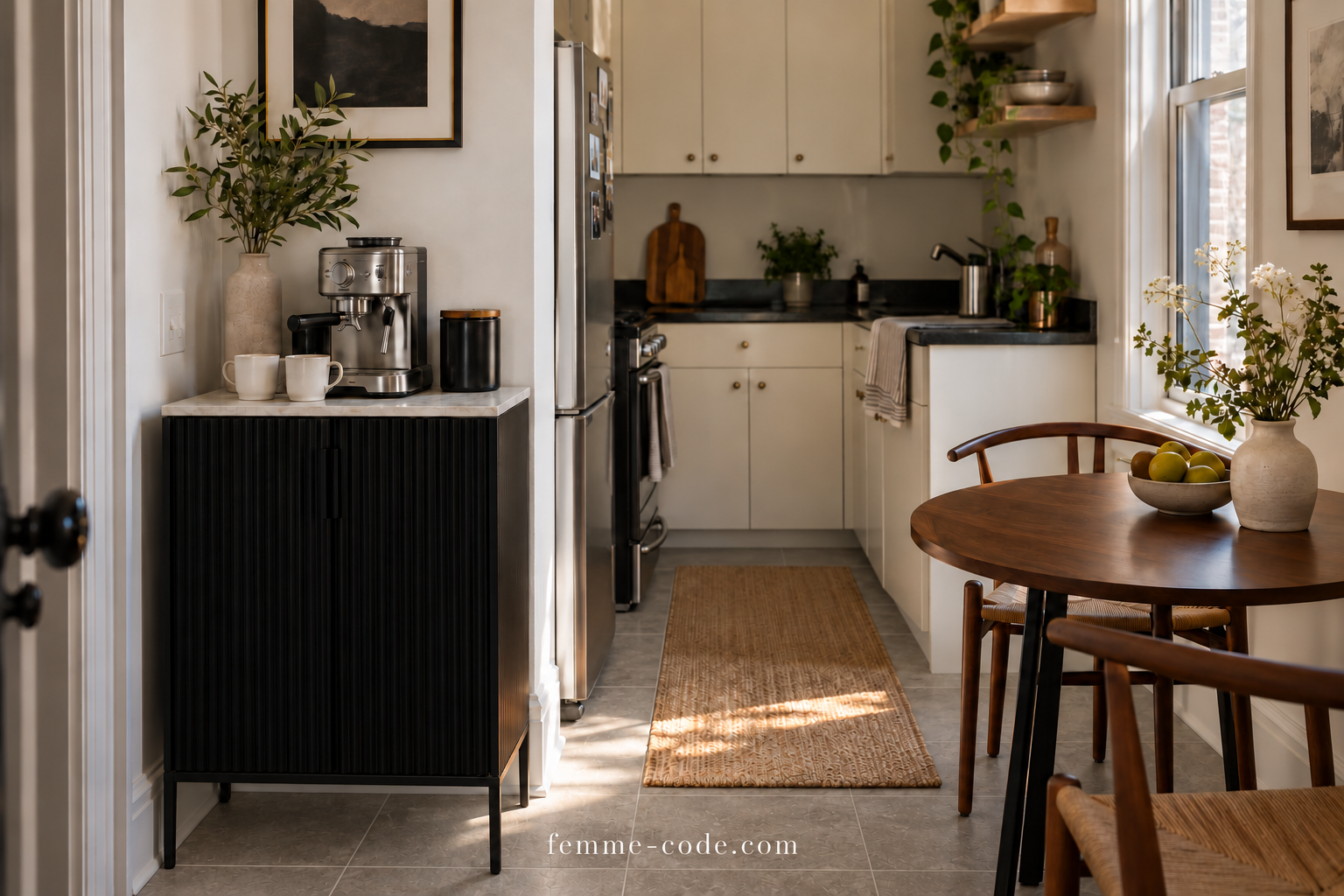
A compact modern sideboard can create a coffee station beside the kitchen or in an adjoining dining nook. Choose one with a stable top at a comfortable working height for preparing drinks, and closed storage for spare cups, napkins and unopened supplies. Select a size that suits the available wall without restricting movement around the dining area.
For a refined look, pair a black sideboard with a pale stone top, white porcelain cups and stainless steel accessories. Subtle fluted fronts or slim silver handles can add texture without making the arrangement busy. Keep the machine and daily essentials on top, leaving a clear spot to set down a cup. A simple mirror above the unit can complete the setting where the room’s proportions allow.
Check the sideboard’s stability, load capacity and surface suitability before placing an appliance on it. Protect sensitive finishes with an appropriate heat- and moisture-resistant surface, wipe up spills promptly and follow the coffee machine manufacturer’s placement and clearance instructions. Keep electrical access practical and cables away from walkways.
4. Add Wall Shelves Above Your Coffee Corner
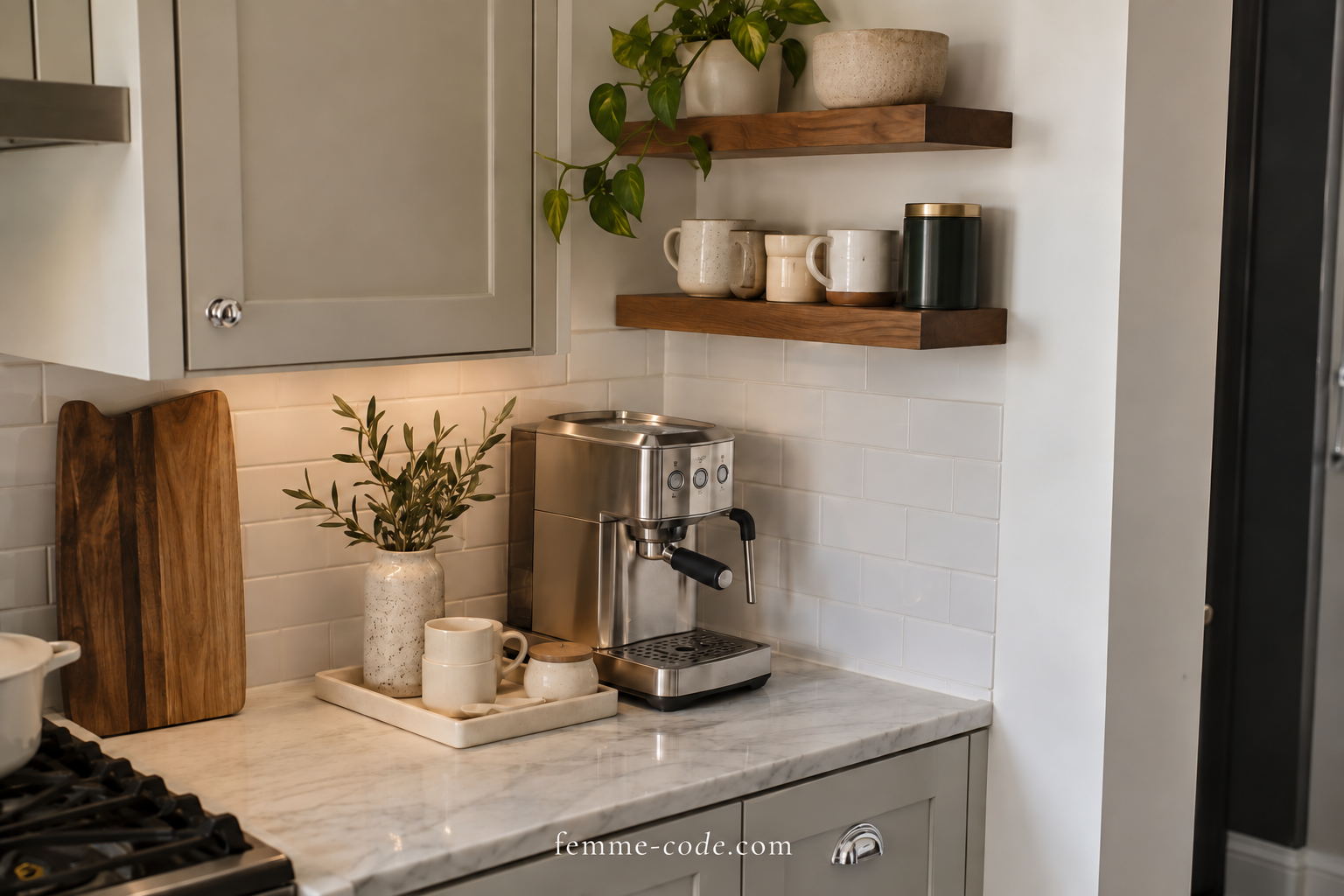
When countertop space is limited, the wall above it can provide extra storage. A shallow shelf can hold a few cups, tea tins or a small decorative object.
Keep frequently used items at an easy-to-reach height. Match the shelf width to the furniture below, and choose fixings suitable for the wall and the expected load.
Leave the clearance required above the appliance. Keep sensitive wood, books and pictures away from the path of steam.
A carefully arranged shelf can be both useful and decorative: a few coordinating cups are enough to create an attractive display.
5. Use a Narrow Freestanding Coffee Station
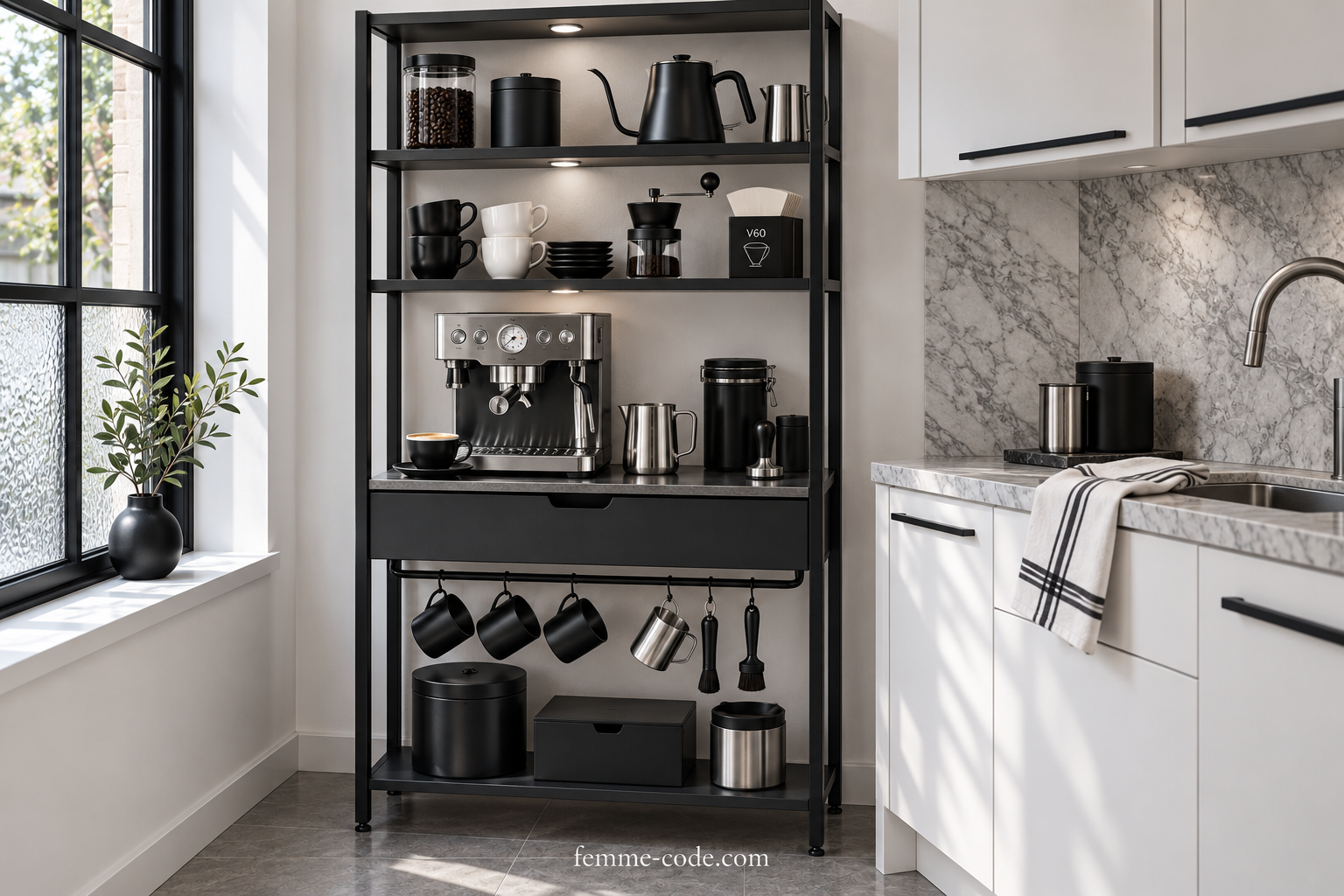
A narrow freestanding unit can create a dedicated coffee station when the kitchen counter is full but a small space beside it or in the dining area is available. A tall, open shelving unit makes use of vertical space and keeps coffee-making essentials together.
Place the machine on a stable, sufficiently deep surface at a comfortable working height. As shown here, use the open shelves above and below it for cups, saucers, a grinder and closed coffee containers, with hooks for a few cups or coffee tools. Leave room above the machine for refilling and follow the manufacturer’s clearance instructions. If you choose a different unit with a drawer, use it to store teaspoons and filters.
Check the unit’s stability and the load capacity of each shelf, including the weight of the machine when filled with water. Secure tall furniture as its manufacturer directs. As an alternative to the open shelving unit pictured here, a serving cart can hold cups and supplies. Choose lockable wheels and only use an electrical appliance on it if both the furniture and appliance instructions allow it.
Measure the furniture’s depth as well as its width, leaving space to walk past and open nearby doors and drawers. For a cohesive look, pair a black metal frame and anthracite shelves with a grey stone appliance surface and a few coordinating cups. Keep the shelves dedicated to the coffee supplies you actually use so the arrangement stays practical and uncluttered.
6. Combine Coffee and Tea on One Surface
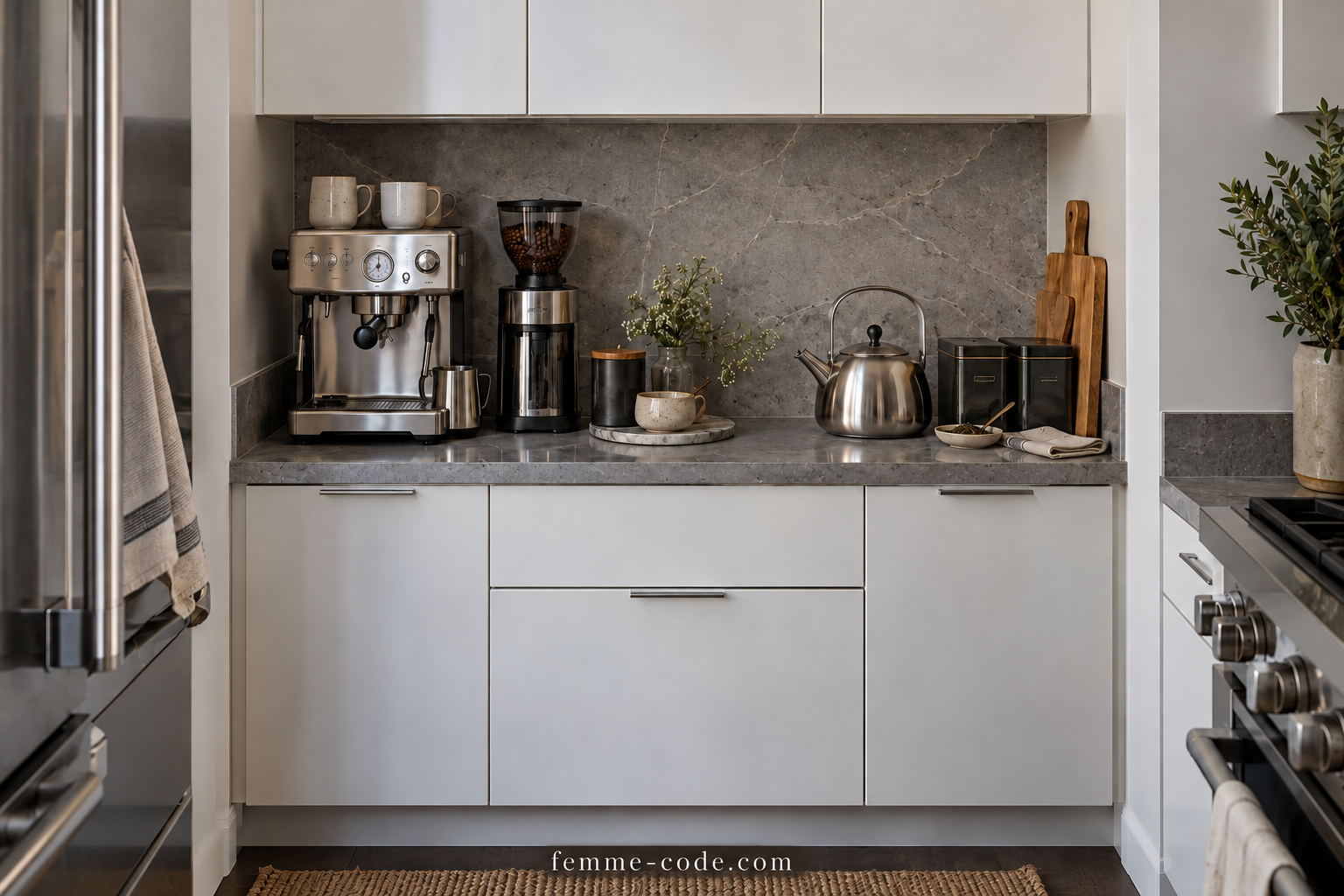
If your household enjoys both coffee and tea, create a shared station with separate areas on the same countertop. As shown here, group the coffee machine, grinder and coffee supplies on one side, and the teapot, tea tins and tea accessories on the other. Keep enough clear space between them to prepare and serve drinks comfortably.
Keep daily essentials at the front and less frequently used accessories in a drawer. Store tea in closed containers and arrange cups together.
For a coordinated look, choose cups in similar colours and storage containers that work well together. Labels are helpful when several similar boxes hold different ingredients.
Let your routine guide the layout: give the easiest-to-reach space to the things you actually use.
7. Keep Supplies in Closed Storage
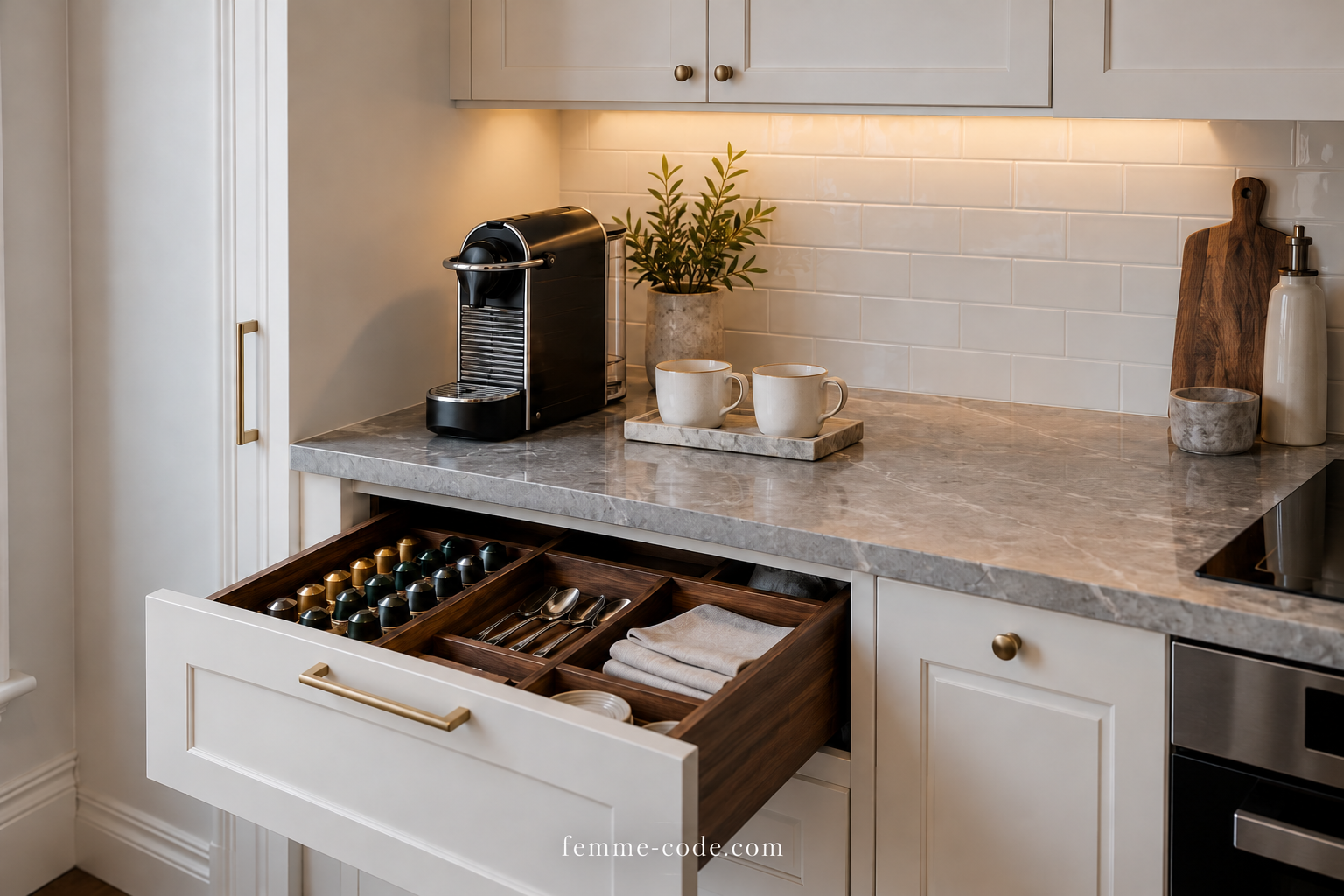
If you prefer clear surfaces, most of your coffee supplies can go into a drawer or cupboard. Leave the machine, a few cups and a small tray on the counter.
A drawer organiser can provide separate compartments for teaspoons, capsules and napkins. Keep unopened supplies farther back and everyday portions at the front.
Plan cupboard storage and appliance operation separately. Only use an electrical coffee machine inside an enclosed space if the manufacturer permits it and all required conditions are met.
8. Hide a Coffee Station Inside a Kitchen Cabinet
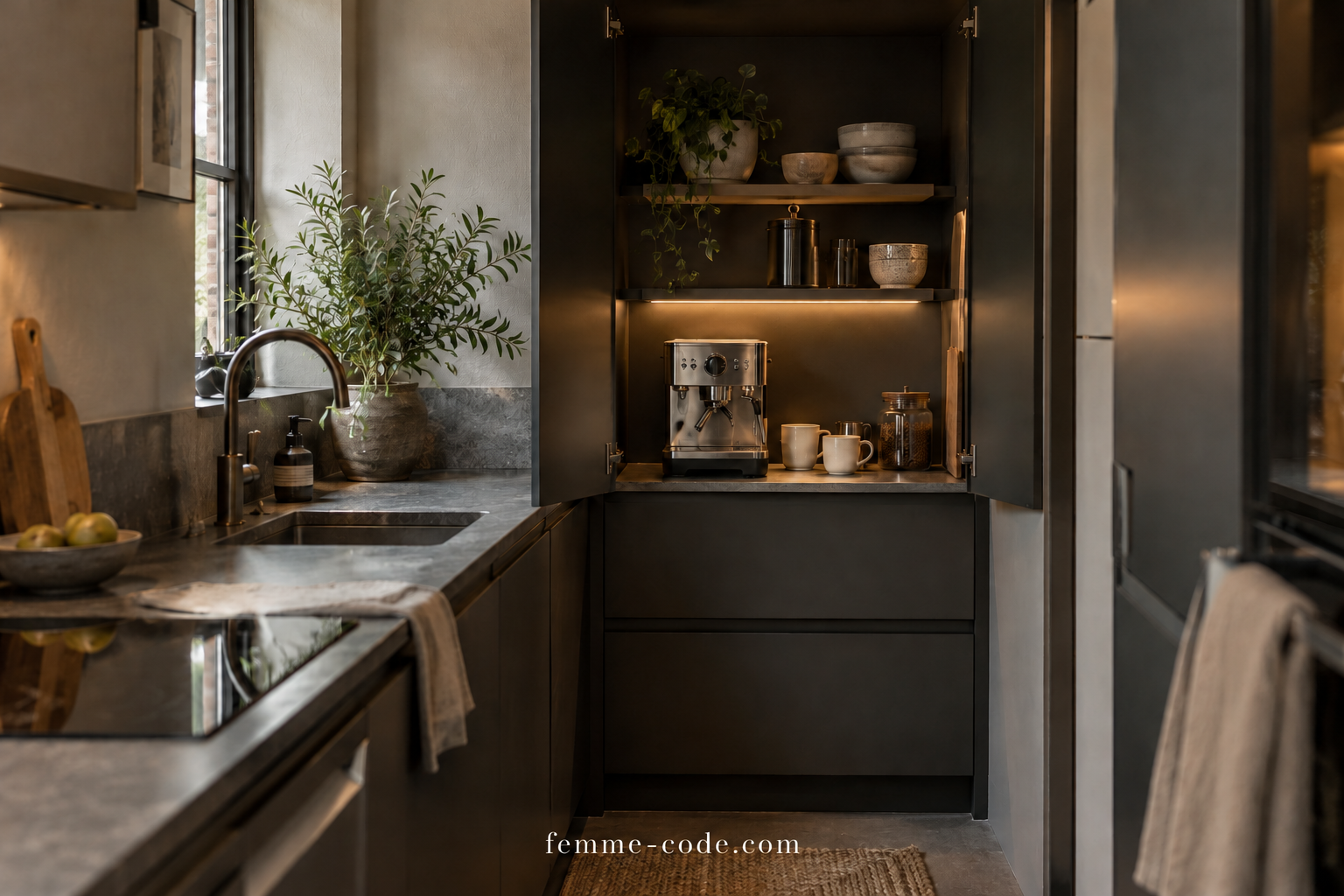
A hidden coffee station keeps the machine, cups and everyday supplies together behind cabinet doors. In a small kitchen, it can make use of an existing tall cabinet or a purpose-designed unit without adding another freestanding piece of furniture.
Create a preparation surface at a comfortable height, with shallow shelves above for cups and closed containers. Leave enough space to access the water tank, clean the machine and prepare your drink. Check that the open doors do not obstruct nearby drawers or the walkway.
For an elegant finish, pair matte anthracite cabinetry with a grey stone worktop, off-white ceramics and discreet shelf lighting. The doors conceal the station between uses, while the illuminated interior makes the arrangement easy to navigate when open.
Plan appliance operation separately from storage. Only run a coffee machine inside a cabinet if the manufacturer permits that installation and the required ventilation, electrical access and clearances are provided. Keep the doors open during permitted operation, and otherwise use the machine on an approved open work surface.
9. Pair a Coffee Corner with a Window Seat and Storage
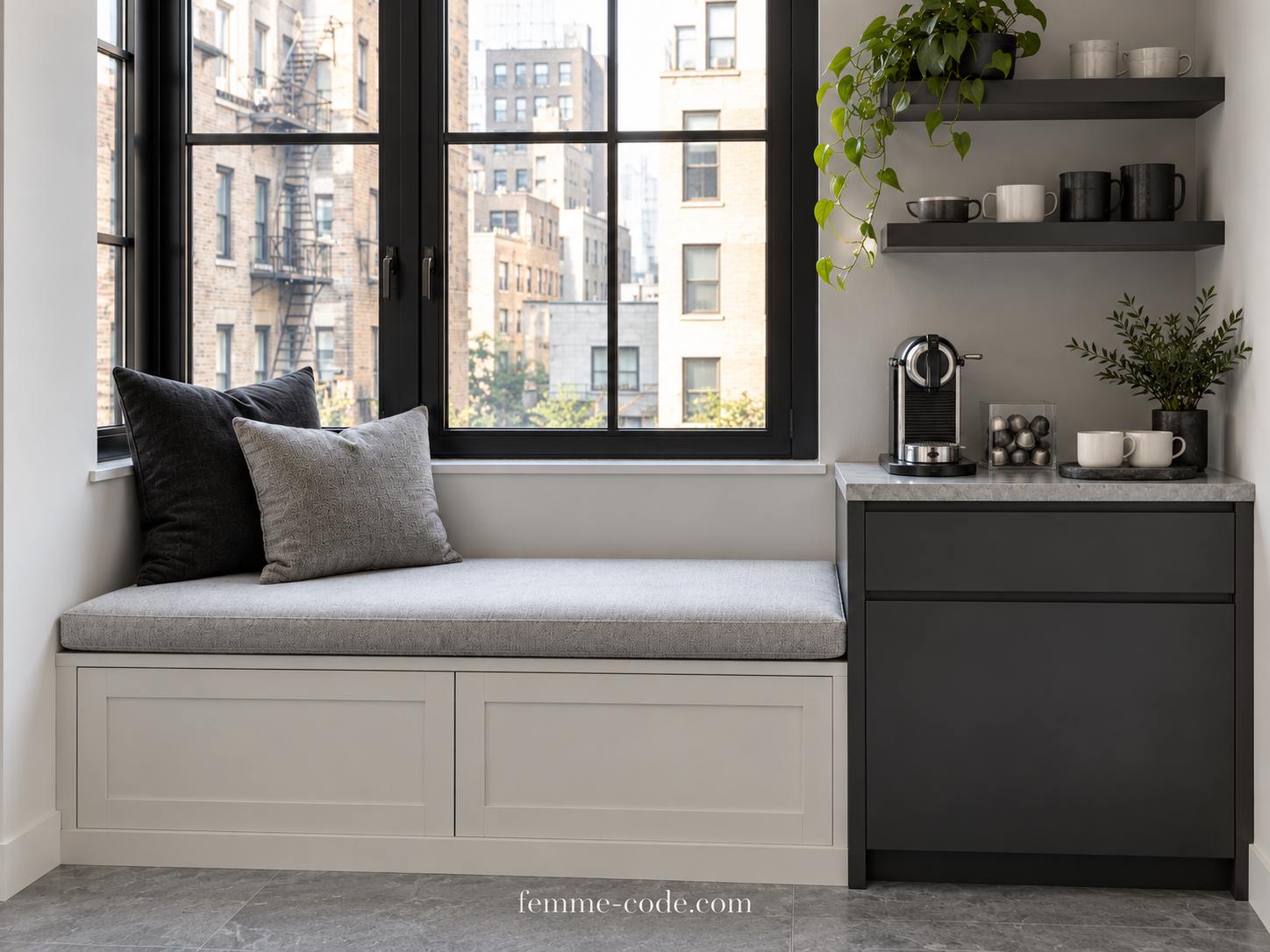
If your small kitchen has a window nook, pair a storage bench beneath the window with a narrow coffee cabinet beside it. This brings seating, extra storage and a place to prepare coffee together in one compact area.
Keep the coffee machine on the cabinet’s stable worktop, separate from the upholstered seat. A small tray can hold two cups, while a capsule holder or closed coffee container keeps everyday supplies within reach. Use shallow wall shelves above the cabinet for additional cups without taking up more floor space.
The bench can store spare napkins, table linens and less frequently used accessories. Choose lift-up storage or front-opening compartments to suit the space, and make sure you can reach the contents comfortably without moving the coffee equipment.
For an elegant city-apartment look, combine off-white bench cabinetry, grey upholstery and an anthracite coffee cabinet with a stone top. Leave room for the window to open, preserve any required radiator ventilation and position the appliance according to the manufacturer’s instructions. A few cushions can make the nook inviting while keeping the arrangement easy to use.
10. Create a Coffee Station on a Sturdy Wall Shelf
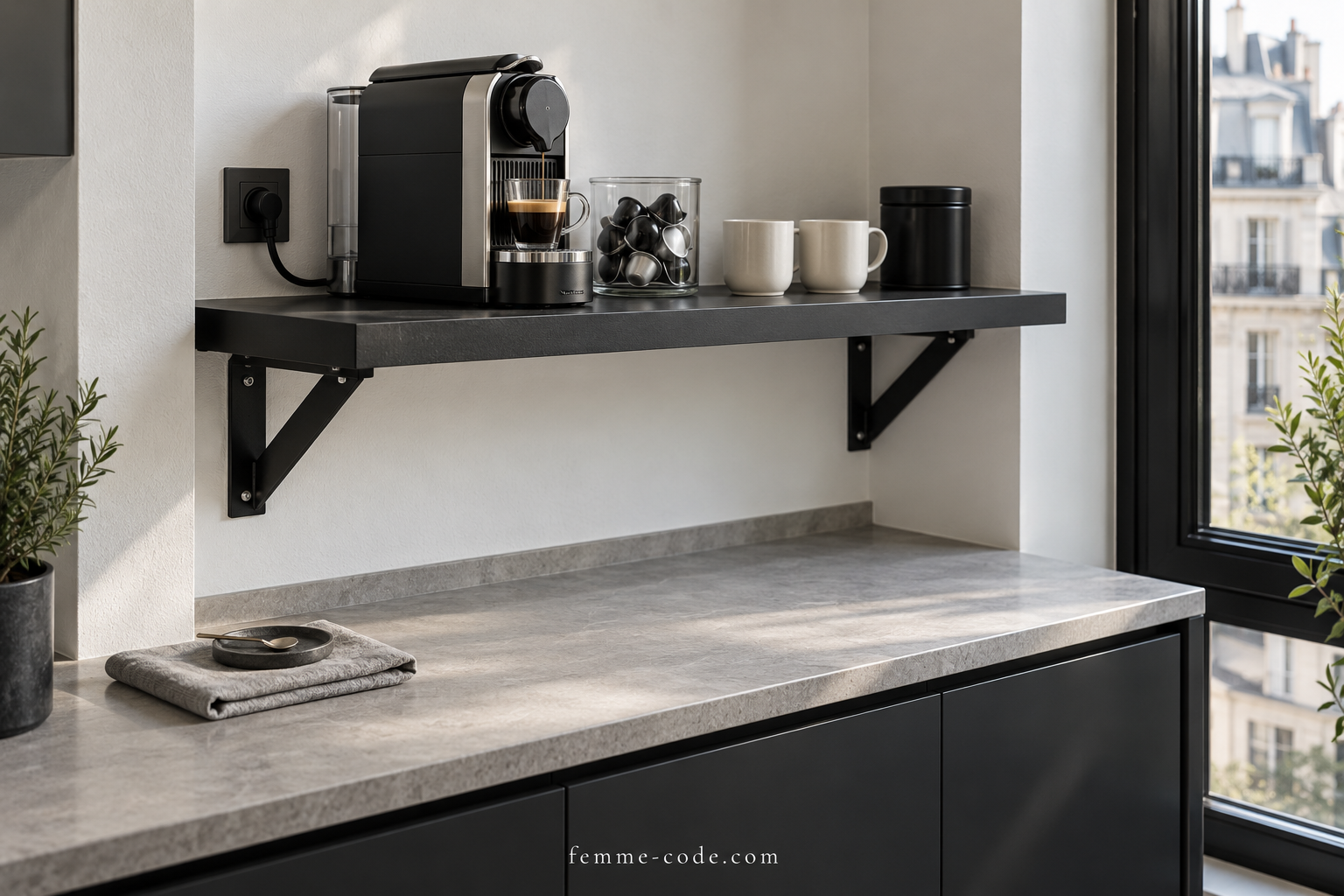
A purpose-designed wall shelf can hold the coffee machine and everyday essentials above the kitchen worktop, keeping the surface below available for preparation. Unlike a shelf used only for displaying cups, this becomes the working coffee station itself.
Choose a shelf deep enough to support the appliance’s entire footprint, with space to set down a cup and access its controls. Position it at a comfortable working height so you can fill the water tank, insert capsules and clean the machine without stretching overhead.
Have the shelf, brackets and wall fixings selected for the wall construction and the combined load of the machine, water and accessories. A decorative floating shelf is not automatically suitable. Follow the appliance manufacturer’s placement and clearance instructions, and arrange the cable so it stays away from water, heat and the preparation area.
Keep the arrangement simple: a compact coffee machine, two cups and a small closed container or capsule holder may be enough. An anthracite shelf against a light wall, paired with a grey stone worktop, creates an understated finish. Leave the surface below mostly clear so the extra storage genuinely improves the kitchen’s usability.
Which Accessories Should You Start With?
First, take a look at what you already own. An existing tray, a few favourite cups and a suitable storage container may be enough for your first arrangement.
If you buy new accessories, consider the following:
- Tray: choose one that fits the designated space and is easy to clean.
- Cups: select a size that suits your usual drink and fits your machine.
- Coffee canister: prioritise a secure closure and materials suitable for food contact.
- Drawer organiser: measure the inside of the drawer before buying.
- Storage furniture: check dimensions, stability and load capacity.
Base larger appliance purchases on how you will actually use them. Alongside a design that suits your interior, consider ease of cleaning and everyday operation.
Frequently Asked Questions About Home Coffee Corners
How can I create a coffee corner on a budget?
Use items you already own and start by reorganising storage. A tray and a cleared drawer can make a noticeable difference. This also makes it easier to see what you really need.
Do I need a separate piece of furniture?
No. A designated section of kitchen counter can work well if it accommodates your equipment and leaves a usable preparation surface.
How can I keep the coffee corner from looking cluttered?
Keep everyday items at the front and store reserves out of sight. Leave a clear spot to set down a cup and prepare your drink.
How can I refresh my coffee corner for autumn?
A darker textile, a wooden tray or a richly coloured ceramic cup can subtly change the mood. Keep the surface easy to use when adding seasonal details.
Start your own coffee corner with one simple step: choose its location and place the tools you reach for every morning there. Let your daily routine shape the final arrangement.
Paid link.
Shop Coffee Corner Essentials →
© Kamilla Csigás ✦FemmeCode — All Rights Reserved